Floor Leveling Compound: Tips and Tricks
When it comes to flooring projects, achieving a smooth and level surface is paramount for the longevity and aesthetic appeal of your floors. Whether you're installing tiles, hardwood, or laminate, using a floor leveling compound can make all the difference. A perfectly leveled floor not only enhances the visual appeal of a space but also ensures the durability and functionality of the flooring material. In this guide, we'll delve into the essentials of floor leveling compounds, offering practical tips and tricks to ensure your project goes off without a hitch.
Understanding the right techniques and materials for floor leveling can save time and money while preventing potential issues down the road. This guide is crafted to help both DIY enthusiasts and professional contractors navigate the complexities of floor leveling with ease. By the end of this article, you'll have a comprehensive understanding of how to select, apply, and troubleshoot floor leveling compounds, setting the stage for a successful flooring project.
Floor leveling compounds, also known as self-leveling underlayments or cement floor levelers, are materials used to correct uneven floors. These compounds can be applied to both interior and exterior surfaces, offering a seamless, flat finish. Their versatility makes them a go-to solution for a variety of flooring challenges, from minor dips to significant surface irregularities.
These compounds are typically made from a blend of cement, polymers, and other additives that improve flow and adhesion properties. Once mixed with water, they create a slurry that can be poured and spread over a surface. As they dry, they form a hard, smooth layer that serves as an ideal base for additional flooring materials. Understanding the different types of floor leveling compounds available is crucial for selecting the right one for your specific project needs.
Types of Floor Leveling Compounds
There are several types of floor leveling compounds available, each designed to meet specific requirements:
- Concrete Underlayment: Ideal for creating a smooth base for your flooring. It's easy to apply and flows evenly across the surface, making it perfect for both large and small areas. This type of compound is often used in residential and commercial settings where a flawless finish is desired.
- Quick Dry Floor Filler: Perfect for projects on a tight schedule. These products dry faster than standard compounds, allowing for quicker turnaround times. They are especially useful in commercial settings where downtime needs to be minimized.
- Cement Floor Leveling Compound: A robust option for heavy-duty applications, suitable for use on concrete slabs. These compounds are designed to withstand heavy loads and are ideal for industrial environments where durability is a priority.
- Exterior Self-Leveler: Designed for outdoor applications, ensuring durability against weather elements. These compounds are formulated to resist moisture, temperature fluctuations, and UV exposure, making them suitable for patios, driveways, and other exterior surfaces.
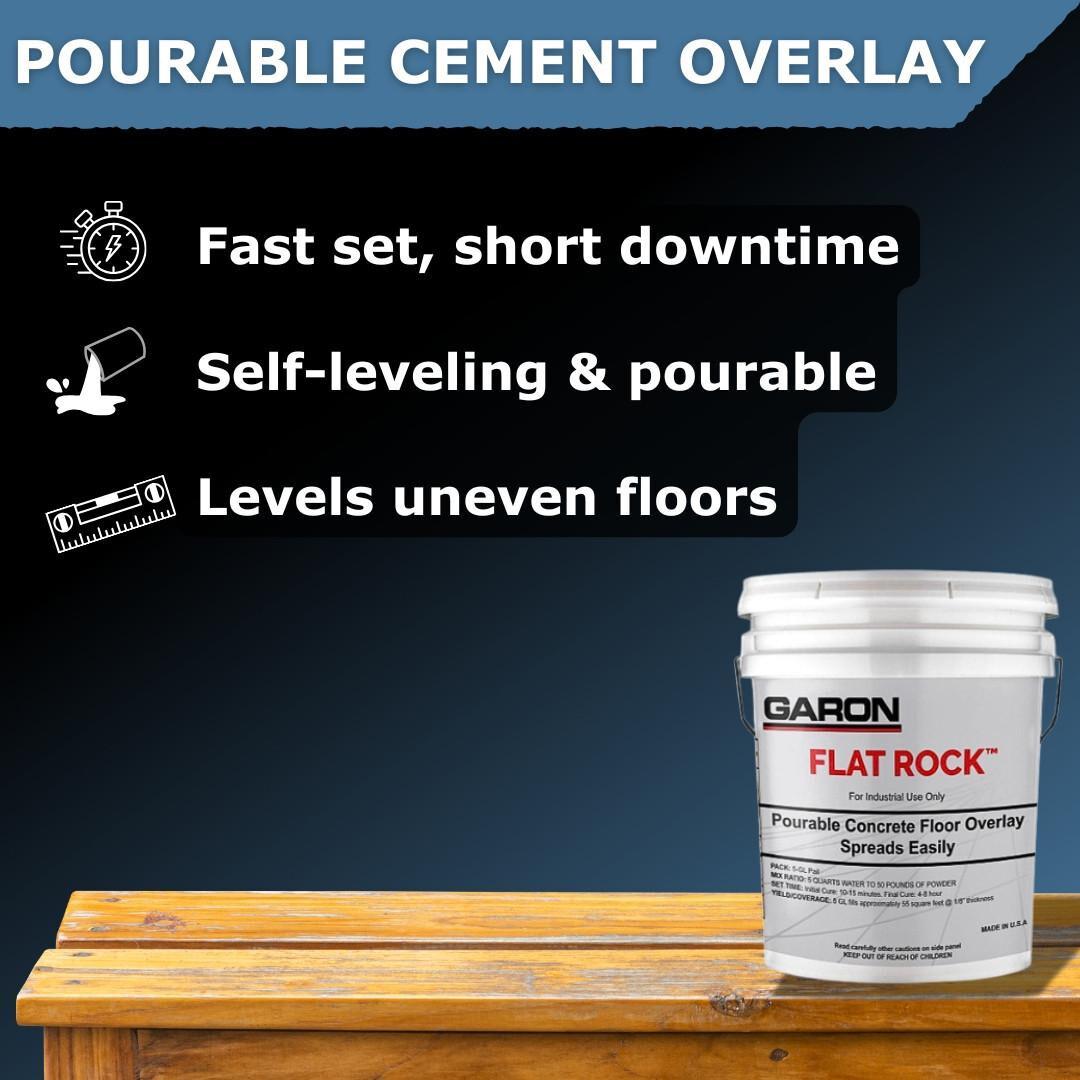
One example is FLAT ROCK™ Pourable Concrete Floor Overlay by Garon Products Inc. FLAT ROCK™ is a high-performance, self-leveling concrete floor resurfacer designed to restore and level worn, uneven, or damaged concrete in demanding industrial and commercial environments. Engineered to become a smooth, pourable cement compound, it flows easily into place and cures to a durable, uniform finish—eliminating the need for extensive troweling while reducing installation time and labor. This advanced resurfacer features a self-priming formula that bonds directly to concrete, helping contractors complete projects faster with fewer steps.
Its versatile application range, from featheredge to thick pours, allows seamless repairs, leveling, and surface restoration in a single application. FLAT ROCK™ also creates a top-coatable surface compatible with epoxy, urethane, and other high-performance floor systems, making it an ideal base for long-lasting protective coatings. What sets FLAT ROCK™ apart is its combination of self-leveling performance, fast cure schedule, and industrial-grade durability. Designed for manufacturing facilities, transit areas, and other heavy-use spaces, it delivers smooth, professional results with minimal downtime, making it a reliable solution for contractors who need speed, strength, and consistent performance on every job.
Choosing the Right Compound
Selecting the right floor leveling product depends on the specific needs of your project. Consider factors such as drying time, the type of flooring being installed, and whether the application is indoors or outdoors. It's also important to evaluate the existing condition of the substrate and any environmental factors that might influence the performance of the compound. FLAT ROCK™ by Garon Products is a top choice; a pourable concrete floor overlay that wil transform your concrete floors.
Consulting with a professional or referring to manufacturer guidelines can provide additional insight into which product will best suit your needs. Remember, the right choice can significantly impact the ease of installation and the longevity of the finished floor. Making an informed decision at this stage will set the foundation for a successful flooring project.
Preparing for Application
Proper preparation is key to achieving the best results with your floor leveling compound. Taking the time to prepare the substrate ensures that the compound adheres correctly, minimizing the risk of future problems. This step is crucial for both DIY enthusiasts and seasoned professionals aiming for a flawless finish.
Preparation involves several critical steps, each of which plays a role in the overall success of the project. Skipping or rushing through these steps can lead to unsatisfactory results and additional work down the line. By investing time in thorough preparation, you lay the groundwork for a smooth and even floor.
Surface Preparation
Before applying any leveling compound, ensure the surface is clean, dry, and free of debris. Remove any loose particles, dust, or old adhesive residues. If the surface is greasy or oily, clean it thoroughly to ensure proper adhesion. This step is essential because any contaminants left on the surface can prevent the compound from bonding effectively.
Depending on the condition of the existing floor, you may need to sand, scrape, or patch certain areas to create a uniform surface. Inspect the substrate for cracks or holes and repair them accordingly. A well-prepared surface not only promotes better adhesion but also improves the overall quality and durability of the finished floor.
Priming the Floor
While priming the floor is a crucial step in the process, some products do not require priming. For example, FLAT ROCK™ is a completely self-leveling, self-priming pourable concrete resurfacer. However, not all concrete repair products are are self-priming. A primer promotes adhesion between the leveling compound and the substrate, preventing issues such as bubbling or peeling. Choose a primer compatible with your specific leveling compound for optimal results. Applying primer is a relatively quick process that can make a significant difference in the outcome of your project.
In addition to improving adhesion, primer can also help seal the substrate and reduce the risk of moisture-related issues. Follow the manufacturer's instructions for primer application, ensuring even coverage across the entire surface. Allow adequate drying time before proceeding to the next step to ensure the primer has fully cured.
Applying the Floor Leveling Compound
Once your surface is prepped, it's time to apply the leveling compound. This stage requires precision and attention to detail to achieve a professional-grade finish. Proper application techniques can minimize errors and ensure a smooth, even surface ready for flooring installation.
Understanding the characteristics of the compound you're using will help guide your application process. Each type of compound has its own set of instructions and recommended methods for optimal results. Following these guidelines closely will help you achieve a perfect finish. FLAT ROCK™ by Garon Products Inc is a completely self-leveling pourable concrete resurfacer. This product requires minimal downtime, so operations can resume quickly.
Mixing the Compound
Follow the manufacturer's instructions for mixing your floor leveling compound. Typically, you'll add water to the dry mix in a bucket, stirring until you achieve a smooth, lump-free consistency. For larger projects, consider using a drill with a paddle attachment to ensure a thorough mix. This step is crucial, as improper mixing can lead to inconsistencies in the compound's performance. Take care to use the correct water-to-mix ratio, as specified by the manufacturer. Over-watering or underwatering can compromise the compound's integrity, leading to issues like cracking or poor adhesion. Mix only the amount you can apply within the compound's working time to avoid wasting.
Pouring and Spreading
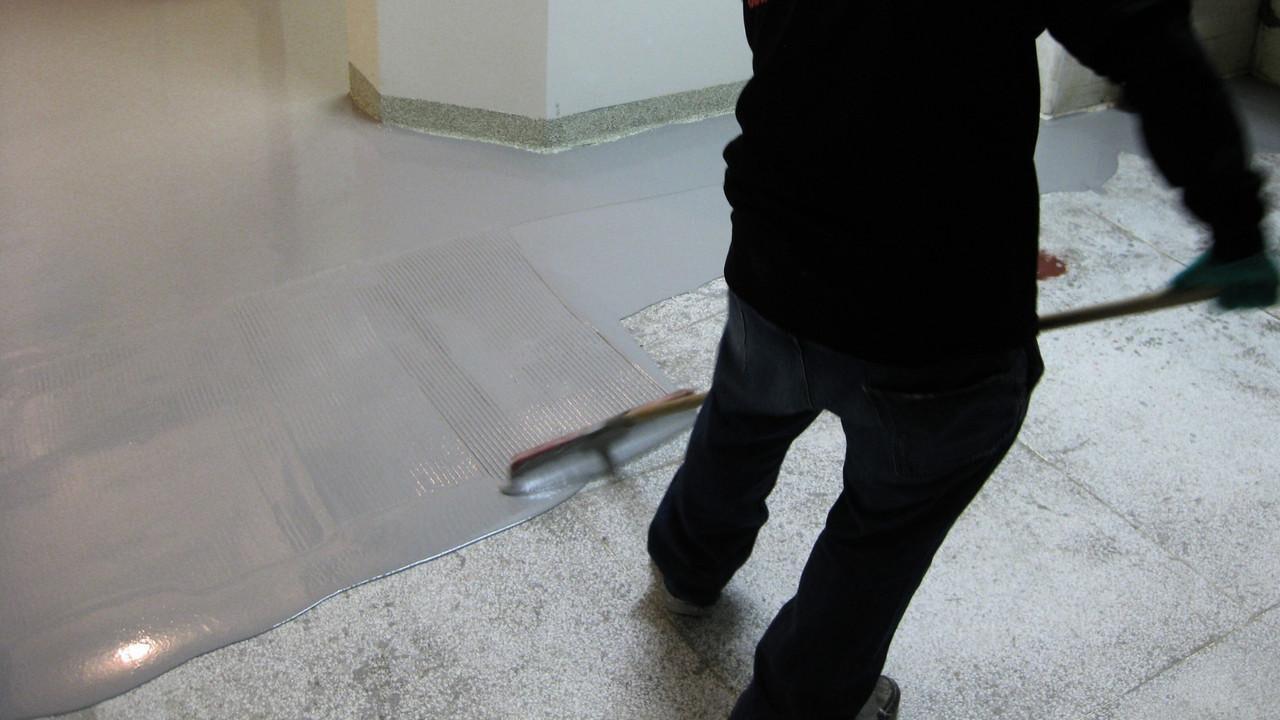
Pour the self-leveling concrete FLAT ROCK™ Pourable Concrete Floor Overlay underlayment onto the prepared surface. Use a long-handled spreader or a gauge rake to distribute the compound evenly. Work quickly but carefully, as most compounds begin to set within 15-30 minutes. This step requires a steady hand and keen attention to detail to ensure a uniform layer across the entire floor. Depending on the size of the area, you may need to work in sections, ensuring each one blends seamlessly into the next. Using a spiked roller can help remove air bubbles and further smooth the surface. Keep an eye on the compound as it sets, making any necessary adjustments to achieve the desired finish.
Allowing for Proper Drying
Drying times vary depending on the type of leveling compound used. Quick-dry floor levelers may be ready for flooring installation within a few hours, while others might require a day or more. Check the product instructions for specific drying times. Patience during this stage is crucial, as rushing the drying process can lead to imperfections.
Monitor environmental conditions such as temperature and humidity, which can affect drying times. Avoid disturbing the area until the compound has fully cured to prevent any damage or unevenness. Once dry, your floor will be ready for the next phase of installation, whether it's tiles, hardwood, or another type of flooring.
Tips for Success
Here are some additional tips to ensure your floor leveling project is a success. These insights can make a significant difference in the ease and outcome of your project, providing a solid foundation for any type of flooring installation.
Check for Moisture
Before applying any leveling compound, check the moisture content of the substrate. High moisture levels can prevent the compound from adhering properly. Use a moisture meter to ensure the substrate is dry enough for application. This step is especially important in areas prone to dampness, such as basements or bathrooms. If moisture levels are too high, consider addressing the underlying issue before proceeding. This might involve installing a vapor barrier or improving ventilation. Ensuring a dry substrate will enhance the bond between the leveling compound and the floor, reducing the risk of future problems.
Avoid Over-Watering
When mixing your compound, avoid adding too much water. Over-watering can weaken the final product, leading to cracks and other issues. Stick to the manufacturer's recommended water-to-mix ratio. Consistency is key, and maintaining the correct ratio ensures that the compound performs as expected. If you're unsure about the right consistency, conduct a small test batch before mixing the entire amount. This allows you to make adjustments without wasting materials. By paying attention to the mixing process, you can achieve a durable and long-lasting floor surface.
Control the Environment
Environmental conditions can affect the drying and curing of your leveling compound. Aim to work in temperatures between 50°F and 85°F, with humidity levels below 75%. Avoid drafts and direct sunlight, which can cause uneven drying. These conditions help ensure that the compound sets evenly and without defects. If you're working in an environment that doesn't meet these conditions, consider using fans, heaters, or dehumidifiers to create a more suitable atmosphere. By controlling the environment, you can mitigate potential issues and achieve a flawless finish.
Troubleshooting Common Issues
Even with careful preparation, issues can arise during a floor leveling project. Here's how to troubleshoot some common problems. Understanding these issues and their solutions can save you time and frustration, ensuring a successful project outcome.
Bubbling or Cracking
If you notice bubbles forming in the leveling compound, it might be due to improper priming or high moisture levels. Ensure the substrate is primed correctly and check moisture content before reapplying. Bubbles can also form if the compound is mixed too vigorously, trapping air in the mixture. Cracking may occur if the compound dries too quickly or if the mix was too dry. Adjusting environmental conditions or revisiting your mixing process can help address these issues. By identifying the root cause, you can take corrective action and prevent future occurrences.
Uneven Surface
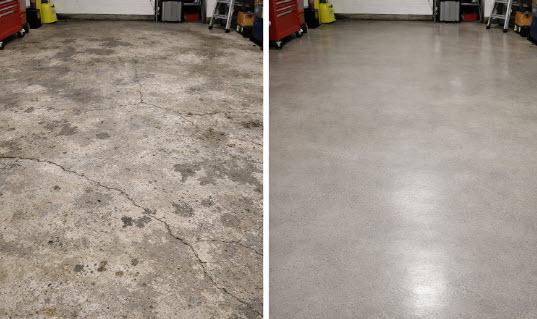
An uneven finish often results from improper spreading or insufficient product use. Ensure you use enough material to cover the entire surface evenly and work quickly to avoid setting before spreading. If areas are missed or inadequately covered, the surface may not level as intended. To correct an uneven surface, consider applying an additional thin layer of compound, ensuring even coverage and proper technique. FLAT ROCK™ Pourable Concrete Floor Overlay will help level out the floors. Taking your time during the initial application can prevent the need for additional work and ensure a smooth, level finish.
Delamination
Delamination occurs when the compound lifts or separates from the substrate. This is usually due to poor adhesion, which can result from surface contamination or lack of priming. Ensure all surfaces are clean and primed before application. Addressing these issues before applying the compound can prevent delamination. If delamination occurs, the affected area may need to be removed and reapplied. Understanding the importance of adhesion and taking steps to ensure a strong bond will help avoid this issue in future projects.
Conclusion
Using a floor leveling compound can significantly enhance the quality of your flooring installation, ensuring a smooth and even surface. By selecting the right product and following these tips and tricks, you'll be well on your way to achieving professional-grade results in your flooring projects. Remember, preparation is key, and taking the time to properly mix, apply, and cure your leveling compound will pay off in the long run. FLAT ROCK™ Pourable Concrete Floor Overlay is a great choice. With the right approach, you can transform your floors into a beautifully leveled foundation ready for any type of flooring installation. Whether you're a DIY enthusiast or a professional contractor, these insights into floor leveling compounds will help you tackle your next project with confidence. Embrace the process, and you'll be rewarded with floors that not only look great but stand the test of time.
Not sure which repair products are right for you?
Contact our team today.