Polyurethane is a durable polymer used as a protective concrete floor coating that resists abrasion, chemicals, moisture, and UV exposure. When applied over properly prepared concrete, polyurethane creates a flexible protective surface that helps reduce dusting, improves cleanability, and extends the service life of residential, commercial, and industrial floors.
Unlike paint, polyurethane is designed specifically for high-wear environments. Compared with many epoxy coatings, polyurethane systems generally offer greater flexibility, improved UV stability, and better resistance to scratching and impact.
What is Polyurethane?
Polyurethane is a synthetic polymer used in coatings, sealants, adhesives, foams, and elastomers. For concrete flooring, polyurethane is formulated as a protective coating that bonds to the surface and creates a durable barrier against abrasion, chemicals, moisture, and everyday wear.
Unlike decorative paints, polyurethane floor coatings are engineered to protect concrete while remaining flexible enough to accommodate minor substrate movement caused by thermal expansion or normal building movement.
Polyurethane coatings are widely used in warehouses, manufacturing facilities, commercial buildings, laboratories, maintenance areas, and institutional facilities because they combine abrasion resistance, flexibility, and long-term appearance retention.
Why Concrete Floors Need Protection
Concrete may appear solid, but it contains microscopic pores that absorb liquids and release fine cement dust over time.
Without a protective coating, concrete is more susceptible to:
- Dusting
- Oil stains
- Water absorption
- Chemical attack
- Surface abrasion
- Freeze-thaw deterioration
- Difficult cleaning
Applying a polyurethane floor coating reduces these issues by creating a protective barrier that isolates the concrete from daily wear and environmental exposure.
Polyurethane vs. Epoxy vs. Concrete Paint
Each concrete floor coating offers different performance characteristics. The best choice depends on the environment and service conditions.
|
Feature |
Polyurethane |
Epoxy |
Concrete Paint |
|
Abrasion Resistance |
Excellent |
Excellent |
Fair |
|
UV Resistance |
Excellent |
Moderate |
Poor |
|
Flexibility |
Excellent |
Moderate |
Low |
|
Chemical Resistance |
Excellent |
Excellent |
Limited |
|
Hot Tire Resistance |
Excellent |
Good |
Poor |
|
Impact Resistance |
Excellent |
Good |
Poor |
|
Typical Service Life |
Long |
Long |
Short |
Concrete Paint
Concrete paint is inexpensive and easy to apply but provides limited protection. It is generally intended for light-duty applications and may peel, chip, or wear quickly under vehicle traffic.
Epoxy Floor Coatings
Epoxy coatings create a hard, durable surface with excellent chemical resistance and are commonly used in industrial facilities. However, because epoxy is relatively rigid, it may crack if the concrete experiences movement or thermal cycling.
Polyurethane Floor Coatings
Polyurethane coatings combine durability with flexibility. They resist scratching, abrasion, UV exposure, and impact while maintaining their appearance in demanding environments.
What Is a Polyaspartic Coating?
Polyaspartic coatings are an advanced type of aliphatic polyurethane coating designed to cure much faster than traditional polyurethane systems.
Compared with conventional polyurethane coatings, polyaspartics typically provide:
- Faster cure times
- Earlier return to service
- Excellent UV stability
- High gloss retention
- Outstanding abrasion resistance
- Excellent chemical resistance
Because of these characteristics, polyaspartic coatings are frequently selected for projects where downtime must be minimized.
Where Are Polyurethane Concrete Floor Coatings Used?
Polyurethane concrete floor coatings are commonly used in commercial, industrial, and institutional environments where concrete requires protection from abrasion, chemicals, moisture, or frequent traffic.
Common applications include:
- Manufacturing and production areas
- Warehouses and distribution centers
- Maintenance and equipment areas
- Automotive service facilities
- Commercial kitchens
- Laboratories
- Mechanical rooms
- Utility areas
- Institutional facilities
- Commercial buildings
- Workshops and service areas
The combination of abrasion resistance, flexibility, cleanability, and UV stability makes polyurethane suitable for a wide range of concrete floor coating applications. Actual suitability depends on the substrate condition, exposure, traffic, and specific coating formulation.
What Are the Advantages of Polyurethane Floor Coatings?
When properly installed, polyurethane coatings can provide several performance benefits.
Reduced Concrete Dusting
The coating seals the concrete surface, helping minimize airborne cement dust.
Improved Chemical Resistance
Polyurethane protects concrete from many automotive fluids, oils, cleaners, salts, and industrial chemicals.
Better Abrasion Resistance
The flexible surface withstands repeated foot traffic, carts, equipment, and vehicle traffic better than many conventional coatings.
Easier Maintenance
Liquids remain on the coating surface rather than penetrating the concrete, making routine cleaning significantly easier.
UV Stability
Aliphatic polyurethane systems resist yellowing and chalking when exposed to sunlight.
When Is Polyurethane Not the Best Choice?
Polyurethane performs well in many environments but is not the ideal solution for every concrete floor.
Alternative systems may be better suited for:
- Concrete with excessive moisture vapor transmission
- Heavy thermal shock environments
- Constant steam cleaning
- Actively moving structural slabs
- Severely deteriorated concrete requiring rebuilding
Selecting the correct coating system begins with evaluating the condition of the concrete and the service environment.
Why Surface Preparation Is Critical to Coating Performance
Proper surface preparation is one of the most important factors affecting the adhesion and long-term performance of a concrete floor coating. Contaminants, insufficient surface profile, excess moisture, or weak concrete can interfere with coating adhesion and contribute to premature failure.
Successful installation may require:
- Removal of oils, grease, and other contaminants
- Removal of incompatible curing compounds, sealers, or existing coatings
- Creation of the appropriate surface profile
- Evaluation of concrete moisture conditions
- Thorough removal of dust and debris before coating application
Evaluating Concrete Surface Porosity
A simple water-drop test can provide a preliminary indication of whether the concrete surface is absorbing water or whether a sealer, coating, or contaminant may be limiting absorption.
If water readily penetrates the concrete, the surface is absorbent. If water beads or remains on the surface, additional evaluation and surface preparation may be necessary before applying a coating.
A water-drop test does not replace proper surface preparation or moisture testing. Surface preparation and testing should always follow the coating manufacturer's recommendations and project requirements.
How to Apply a Polyurethane Concrete Floor Coating
Although installation procedures vary by product, the basic process includes:
-
Prepare the Concrete
Clean, profile, and dry the surface.
-
Repair Surface Defects
Repair cracks, spalls, and damaged concrete before coating.
-
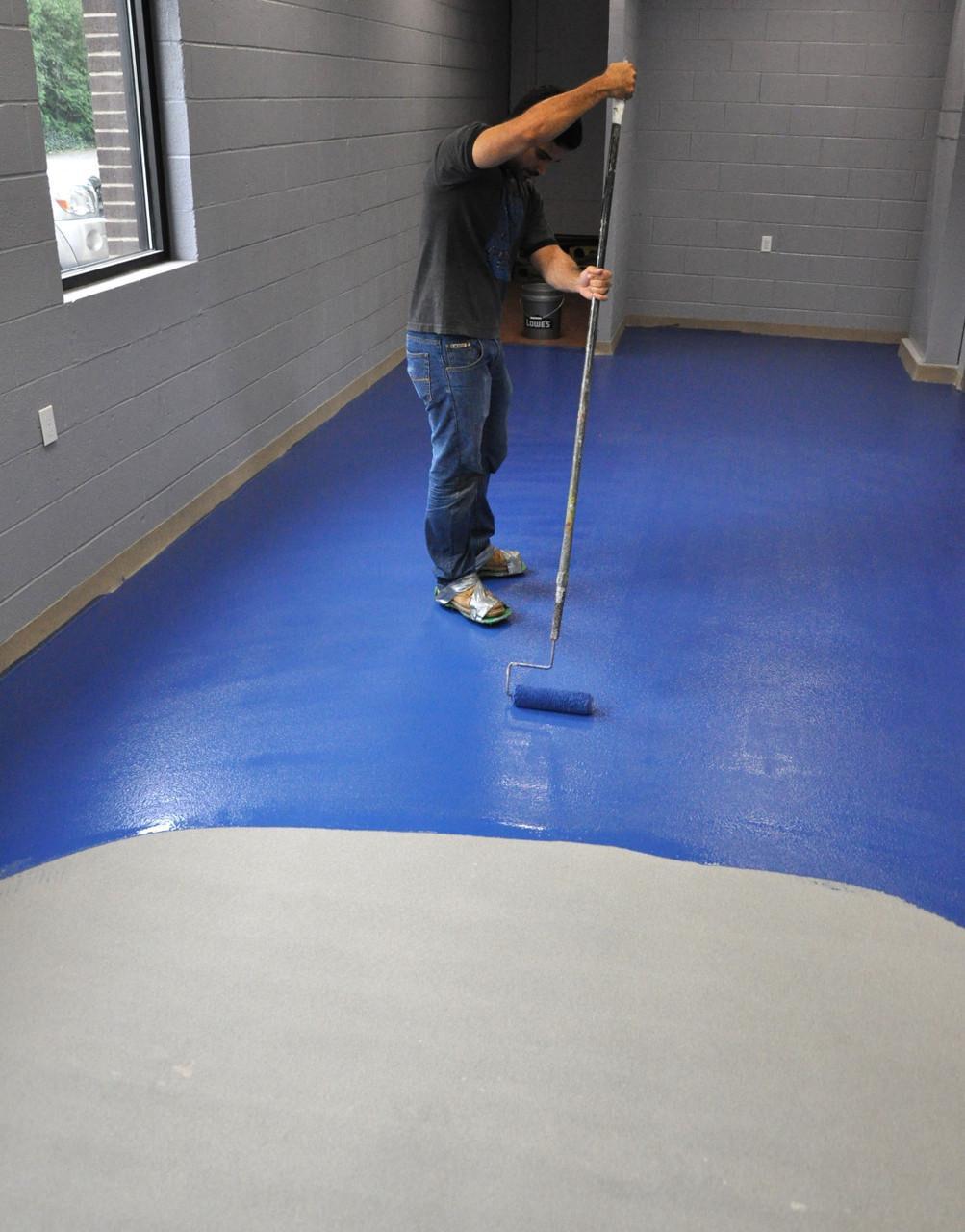
Apply Thin, Uniform Coats
Use the recommended roller or squeegee and maintain consistent coverage.
-
Allow Proper Cure Time
Observe all recoat windows and cure schedules before returning the floor to service.
Multiple thin coats generally provide better performance than one heavy application.
Featured Product: ACCELARESIN™ Urethane Polyaspartic Topcoat
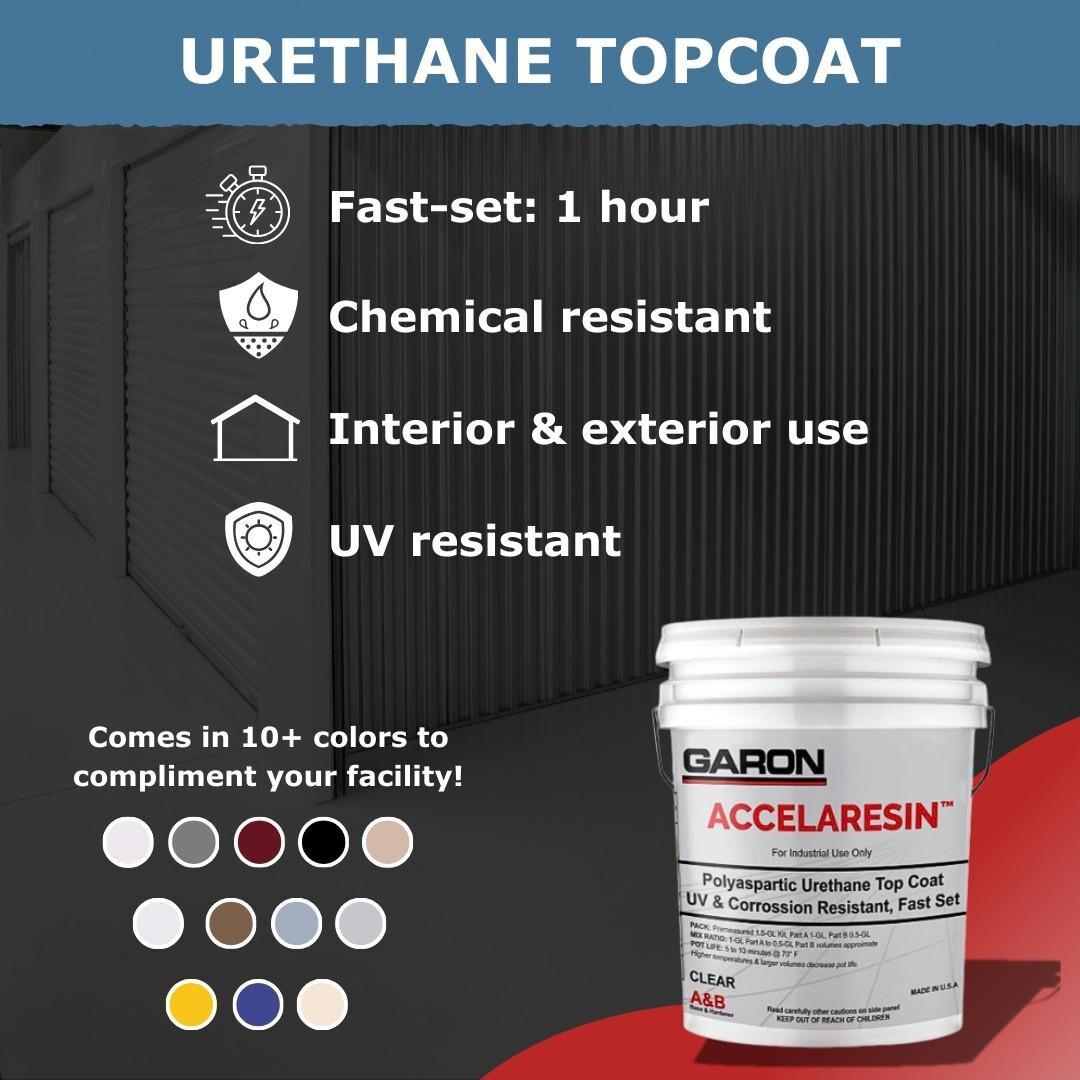
For projects requiring rapid return to service and long-term durability, ACCELARESIN™ is Garon's professional-grade urethane polyaspartic concrete floor coating.
ACCELARESIN™ Features
- Fast-curing polyaspartic technology
- High abrasion resistance
- Excellent chemical resistance
- UV-stable, non-yellowing finish
- High-gloss appearance
- Long-term protection for concrete floors
Typical Applications
- Warehouse floors
- Manufacturing and production areas
- Commercial facilities
- Maintenance and service areas
- Mechanical rooms
- Utility spaces
- Workshops
- Garage floors
Because ACCELARESIN™ combines polyurethane durability with polyaspartic cure technology, it helps reduce downtime while providing long-lasting floor protection.
Key Takeaways
- Polyurethane concrete floor coatings protect concrete from abrasion, chemicals, moisture, staining, and everyday wear.
- Polyurethane generally provides greater flexibility and UV stability than many epoxy coatings, while epoxy systems can provide greater film build and strong chemical resistance.
- Polyaspartic coatings are a specialized type of polyurethane technology designed for faster curing and earlier return to service.
- Surface preparation, substrate condition, moisture, traffic, and environmental exposure all affect coating performance.
- The appropriate concrete floor coating should be selected according to the facility's service conditions rather than coating chemistry alone.
Frequently Asked Questions
Is polyurethane better than epoxy for concrete floors?
Neither coating is universally better. Polyurethane generally offers greater flexibility and UV resistance, while epoxy often provides a thicker build and excellent chemical resistance. The appropriate system depends on the application.
How long does a polyurethane concrete floor last?
Service life depends on traffic, maintenance, surface preparation, and environmental exposure. Properly installed polyurethane coatings can provide many years of protection under normal operating conditions.
Can polyurethane be applied over epoxy?
Yes. Polyurethane is frequently used as a protective topcoat over epoxy flooring systems to improve UV stability, abrasion resistance, and long-term appearance.
Does polyurethane prevent concrete dusting?
Yes. By sealing the concrete surface, polyurethane significantly reduces concrete dusting while making floors easier to clean.
Is polyaspartic the same as polyurethane?
Polyaspartic is a specialized type of aliphatic polyurethane coating formulated to cure more quickly while maintaining many of the same durability and chemical resistance characteristics.
Conclusion
Polyurethane concrete floor coatings provide durable protection against abrasion, chemicals, moisture, and everyday wear while improving the cleanability and maintainability of concrete surfaces. For projects requiring faster installation and earlier return to service, polyaspartic polyurethane coatings can provide many of the protective characteristics associated with polyurethane systems while offering significantly faster cure times.
Selecting the appropriate coating system depends on the condition of the concrete, expected traffic, chemical and environmental exposure, moisture conditions, and required return-to-service time. Proper surface preparation and installation according to the coating manufacturer's requirements are also critical to achieving reliable long-term performance.
If you're selecting a protective coating for an industrial or commercial concrete floor, explore ACCELARESIN™ for specifications, coverage, cure times, and application information. If you're unsure which floor coating system is appropriate for your project, contact our technical team for product recommendations.