A floor leveling compound is used to correct uneven, worn, or irregular concrete surfaces by creating a smoother, more uniform floor. Depending on the product, a concrete floor leveler can fill low areas, correct surface variations, restore deteriorated concrete, or prepare a floor for a subsequent coating or flooring system.
For industrial and commercial facilities, proper floor leveling can also help address operational problems caused by uneven concrete, including rough equipment travel, inconsistent coating thickness, low spots, and damaged walking or traffic surfaces.
Choosing the correct leveling material—and preparing the concrete properly—are critical to achieving a durable repair.
What Is a Floor Leveling Compound?
A floor leveling compound is a flowable or spreadable material applied over an existing substrate to correct variations in elevation and create a more uniform surface.
Many concrete floor leveling products are cement-based and are formulated with additives that improve flow, adhesion, strength, or working characteristics. Depending on the formulation, they may be used for applications ranging from shallow surface corrections to thicker concrete resurfacing.
Terms commonly used for these materials include:
- Floor leveling compound
- Concrete floor leveler
- Self-leveling concrete
- Self-leveling underlayment
- Concrete floor overlay
- Pourable concrete resurfacer
These terms are sometimes used interchangeably, but products can differ significantly in intended use, application thickness, strength, curing requirements, and suitability as a finished surface.
When Should You Use a Concrete Floor Leveler?
A concrete floor leveler is appropriate when an existing concrete surface needs to be made smoother, flatter, or more uniform without replacing the entire slab.
Common applications include:
- Uneven concrete floors
- Low or depressed areas
- Worn industrial concrete
- Rough or irregular floor surfaces
- Surface deterioration
- Transition areas between different floor elevations
- Concrete that requires resurfacing before a compatible coating system is installed
In manufacturing plants, warehouses, commercial buildings, institutional facilities, and other heavy-use environments, the objective is often more than appearance. Uneven or deteriorated floors can interfere with material-handling equipment, cleaning, maintenance operations, and the performance of subsequent concrete floor repair and resurfacing systems.
Before selecting a leveling compound, determine whether the problem is limited to the concrete surface or is being caused by movement, structural conditions, moisture, or another underlying issue.
What Types of Floor Leveling Compounds Are Available?
Floor leveling products are not all designed for the same conditions. The appropriate material depends on the substrate, required thickness, service environment, installation schedule, and intended finished floor.
Self-Leveling Underlayments
Self-leveling underlayments are typically used to create a smooth surface before installing another flooring material. They are formulated to flow across the substrate and correct relatively small variations in elevation.
Rapid-Setting Floor Levelers
Rapid-setting formulations are designed for projects where minimizing downtime is important. Depending on the product, they may allow subsequent work or return to service sooner than conventional cementitious materials.
Heavy-Duty Concrete Resurfacers
Industrial concrete resurfacers are intended for more demanding environments where the repaired surface may experience equipment traffic, abrasion, or other service conditions.
These materials should be selected according to the anticipated loads and operating environment rather than simply by how easily they flow.
Exterior Leveling and Resurfacing Products
Exterior concrete is exposed to moisture, temperature changes, and other environmental conditions. Products used outdoors must specifically be designed for those exposures.
Do not assume that an interior self-leveling underlayment is suitable for exterior concrete.
How Do You Prepare Concrete for Floor Leveling Compound?
Successful concrete leveling starts with proper surface preparation. Even a high-performance leveling material can fail if it is installed over weak, dirty, contaminated, or otherwise unsuitable concrete.
Inspect the Existing Concrete
Before beginning, evaluate the floor for:
- Loose or deteriorated concrete
- Cracks and joints
- Oil, grease, or chemical contamination
- Existing coatings or adhesives
- Moisture conditions
- Significant elevation changes
- Areas of active movement
Structural movement, active cracks, or significant moisture problems may require correction before a leveling material is installed.
Clean and Prepare the Surface
Remove materials that could interfere with adhesion. Depending on the floor and the selected product, preparation may include removing:
- Dirt and dust
- Oil and grease
- Loose concrete
- Existing coatings
- Adhesive residue
- Surface contaminants
The required preparation method should always follow the leveling compound manufacturer's instructions.
Determine Whether Primer Is Required
Many floor leveling compounds require a compatible primer to promote adhesion and control substrate absorption. Other products are formulated to be self-priming under specified conditions.
Never assume a primer is—or is not—required based on the general product category. Follow the manufacturer's application requirements for the specific product being installed.
How Do You Apply Floor Leveling Compound?
Floor leveling compound must be mixed, placed, and finished within the manufacturer's specified working time. Careful planning is especially important when covering larger industrial floor areas.
1. Plan the Application
Before mixing material, determine:
- Total floor area
- Required application thickness
- Amount of material required
- Mixing and placement sequence
- Available working time
- Number of workers needed
- Required tools and equipment
For larger areas, planning helps maintain a continuous application and reduces the possibility of cold joints or inconsistent elevations.
2. Mix According to Manufacturer Instructions
Use the specified liquid-to-powder or component ratio. Adding extra water to improve flow can adversely affect the cured material.
Mix only as directed and use appropriate mixing equipment for the quantity being prepared.
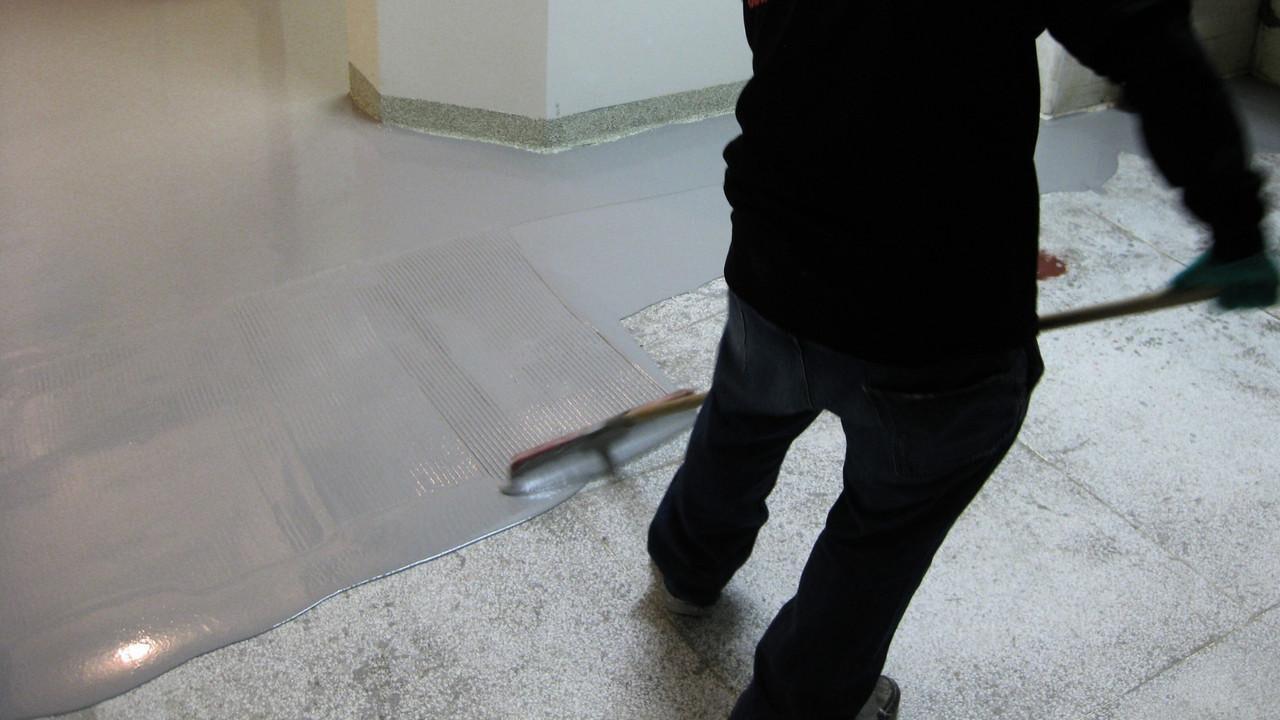
3. Pour and Distribute the Material
Place the mixed compound onto the prepared concrete and distribute it according to the manufacturer's instructions.
Depending on the product, tools may include a gauge rake, spreader, smoother, or other application equipment.
A product described as “self-leveling” still requires proper placement. Self-leveling characteristics help the material flow and settle, but they do not compensate for improper mixing, insufficient material, poor preparation, or unsuitable application conditions.
4. Maintain the Required Thickness
Application thickness is an important part of product selection and installation.
Some materials are designed primarily for thin leveling applications, while others can transition from a featheredge to substantially deeper sections. Using a material outside its specified thickness range can affect performance.
5. Allow the Material to Cure
Cure time varies significantly among floor leveling products.
Temperature, humidity, application thickness, and product formulation can all influence curing. Follow the manufacturer's requirements before allowing traffic or installing a subsequent flooring or coating system.
What Causes Floor Leveling Compound to Fail?
Most floor leveling failures can be traced to substrate conditions, preparation, mixing, application, or curing. Identifying the cause is important before attempting another repair.
Poor Adhesion or Delamination
When a leveling compound separates from the concrete, possible causes include:
- Inadequate surface preparation
- Oil or chemical contamination
- Weak underlying concrete
- Incorrect or missing primer when required
- Incompatible existing coatings
- Moisture-related conditions
Simply covering a poorly bonded area with additional material usually does not correct the underlying adhesion problem.
Cracking
Cracks can result from several conditions, including substrate movement, incorrect mixing, excessive water, unsuitable application thickness, or curing conditions.
The cause of cracking should be evaluated before repairs are made.
Uneven Finished Surface
An uneven result may occur when there is insufficient material, inconsistent placement, improper mixing, or the compound begins setting before it has been fully distributed.
Proper estimating and application planning are especially important when leveling large floor areas.
Air Bubbles or Surface Defects
Air entrainment, substrate porosity, mixing technique, and application procedures can contribute to bubbles or other surface imperfections.
Follow the product instructions regarding mixing speeds, primers, application tools, and finishing procedures.
How Do You Choose a Floor Leveling Compound?
The correct floor leveling compound is determined by the condition of the concrete and the demands placed on the finished floor. Product selection should be based on performance requirements rather than the term “self-leveling” alone.
Consider:
- Interior or exterior exposure
- Required application thickness
- Size and depth of low areas
- Expected foot, cart, or equipment traffic
- Required return-to-service time
- Existing concrete condition
- Moisture conditions
- Whether another flooring system will be installed
- Compatibility with subsequent epoxy, urethane, or other coatings
Industrial facilities should also consider how the repaired floor will be used after installation. A material intended primarily as an underlayment may have different performance requirements from a concrete resurfacer designed for demanding facility conditions.
FLAT ROCK™ Pourable Concrete Floor Overlay
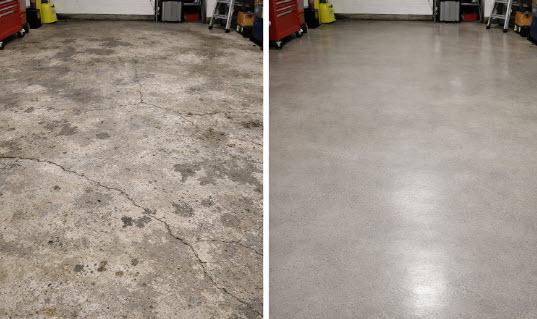
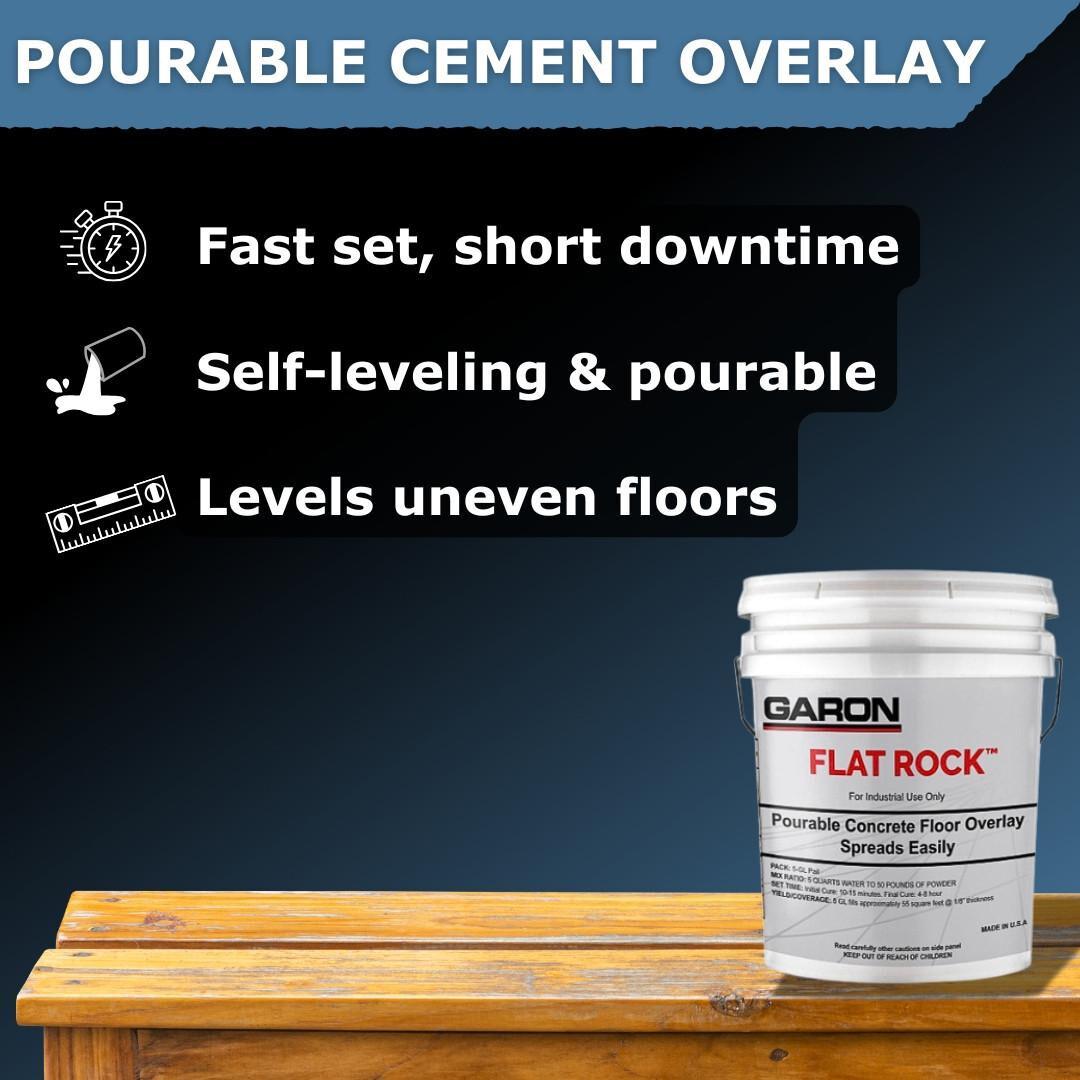
FLAT ROCK™ Pourable Concrete Floor Overlay is a self-leveling, self-priming cementitious concrete resurfacer designed for restoring worn, uneven, or damaged concrete floors.
Its pourable consistency allows the material to flow into low and irregular areas while reducing the amount of troweling required compared with conventional repair mortars.
FLAT ROCK™ can be applied from a featheredge to 2 inches, making it suitable for both shallow surface corrections and deeper floor-leveling applications.
Typical applications include:
- Manufacturing facilities
- Warehouses
- Industrial floors
- Commercial facilities
- Worn or uneven concrete surfaces
- Areas requiring a smooth concrete overlay
- Floors that will subsequently receive a compatible coating system
Because FLAT ROCK™ is self-priming, a separate primer is not required when the product is installed over properly prepared concrete according to Garon Products' application instructions.
Can FLAT ROCK™ Be Coated?
Yes. FLAT ROCK™ can serve as a substrate for compatible floor coating systems, but the resurfacer must be allowed to cure for the required period before coating.
For FLAT ROCK™, allow 28 days of final cure before applying a subsequent coating system. Always review the current product instructions before installation.
This distinction is important when planning projects that require both floor leveling and a protective epoxy, urethane, or other coating.
Key Takeaways
- Floor leveling compound is used to correct uneven, worn, or irregular concrete surfaces.
- Different leveling products are designed for different thicknesses, substrates, environments, and service conditions.
- Surface preparation is critical to achieving proper adhesion.
- Do not add additional water beyond the manufacturer's specified ratio to increase flow.
- Determine whether the selected product requires a primer before application.
- Self-leveling materials still require proper mixing, placement, thickness control, and curing.
- Industrial applications should consider traffic, downtime, coating compatibility, and long-term service conditions when selecting a floor leveler.
- FLAT ROCK™ is a self-leveling, self-priming concrete resurfacer that can be applied from featheredge to 2 inches.
- FLAT ROCK™ requires 28 days of final cure before applying a subsequent coating system.
Frequently Asked Questions About Floor Leveling Compound
What is floor leveling compound used for?
Floor leveling compound is used to correct uneven, low, worn, or irregular floor surfaces. On concrete, it can create a smoother and more uniform surface for continued service or for installation of a compatible flooring or coating system.
Is self-leveling concrete the same as regular concrete?
No. Self-leveling products are specially formulated to flow and settle more readily than conventional concrete or repair mortar. Their composition, application thickness, working time, strength, and intended use vary by product.
Does floor leveling compound require a primer?
Many floor leveling compounds require a compatible primer, but some products are formulated to be self-priming. Check the manufacturer's requirements for the specific product and substrate rather than assuming a primer is always necessary.
How thick can floor leveling compound be applied?
The allowable thickness depends entirely on the product. Some floor levelers are designed for relatively thin applications, while products such as FLAT ROCK™ can be installed from a featheredge up to 2 inches. Always stay within the manufacturer's specified application range.
Can floor leveling compound be used over cracked concrete?
Minor cracks may be repairable before leveling, but the cause and condition of the cracking should first be evaluated. Active movement or structural problems should not simply be covered with leveling compound because cracks may transfer through the new surface.
Can you apply epoxy over floor leveling compound?
It depends on the leveling material and coating system. The resurfacer must be suitable for coating, fully cured as required, properly prepared, and compatible with the selected coating. FLAT ROCK™ can be top-coated with a compatible system after its required 28-day final cure.
Need Help Selecting a Concrete Floor Leveling Solution?
For worn, uneven, or damaged concrete in industrial and commercial facilities, explore FLAT ROCK™ Pourable Concrete Floor Overlay for product specifications, application information, and coverage.
For projects with unusual depths, traffic requirements, substrate conditions, or coating requirements, contact Garon Products for help determining the appropriate concrete repair or resurfacing system.