Introduction
If you’re constantly sweeping dust from your garage or facility floor, you’re not imagining it. Concrete isn’t a solid slab — it’s a porous material filled with millions of microscopic air pockets. Think of it like a rigid sponge. Those tiny pores release fine concrete dust over time, especially when the surface is unsealed.
The only permanent solution? Applying a high-performance polyurethane concrete floor coating that seals the pores and locks out dust, moisture, and stains.
If you’re searching for the best polyurethane for concrete floors — especially for garages, basements, workshops, or warehouses — understanding your options is the first step.
Why Unsealed Concrete Floors Always Stain and Dust
Because concrete is porous, spills soak in immediately. Oil, gasoline, road salt, lawn chemicals, and even water penetrate the surface, causing permanent staining and deterioration.
A properly applied polyurethane concrete sealer:
- Eliminates concrete dusting
- Prevents oil and chemical stains
- Resists moisture penetration
- Improves durability and longevity
- Makes floors easier to clean
Sealing concrete isn’t cosmetic — it’s protective.
Paint vs. Epoxy vs. Polyurethane: Which Concrete Floor Coating Is Best?
When comparing concrete floor coatings, most facility owners consider three primary options:
- Concrete Floor Paint
- Easy to apply
- Budget-friendly
- Prone to peeling and hot-tire pickup
- Limited durability
Standard paint often fails in garages due to heat from tires softening the coating.
- Epoxy Coatings
- Thick, rigid surface
- Fills minor imperfections
- Some products will scratch and chip
- Often yellows with UV exposure
Epoxy is durable but brittle. In environments with temperature changes or heavy traffic, it can crack or discolor over time.
- Polyurethane &PolyasparticCoatings (Best Overall Performance)
A urethane polyaspartic topcoat provides:
- Superior flexibility
- Exceptional scratch resistance
- UV stability (non-yellowing)
- Chemical resistance
- Faster cure times
- Long-term durability
For most garages, basements, warehouses, and workshops, polyurethane — especially advanced polyaspartic systems — outperforms traditional epoxy coatings.
Why Polyurethane Wins for Garages, Basements, Industrial & Commercial Spaces
The biggest advantage of polyurethane is flexibility.
Unlike rigid epoxies, a high-quality polyurethane concrete floor coating has slight elasticity. This allows it to:
- Absorb impact from dropped tools
- Resist cracking from temperature changes
- Withstand heavy vehicle traffic
- Reduce surface scratching
UV Resistance That Lasts
Many epoxy floors yellow over time, especially near garage doors or windows. Polyurethane and polyaspartic coatings remain clear and glossy even with prolonged sunlight exposure.
Chemical and Moisture Resistance
Oil drips. Gasoline spills. De-icing salts. Brake fluid.
With the right polyurethane system, contaminants remain on the surface for easy cleanup instead of permanently staining your concrete.
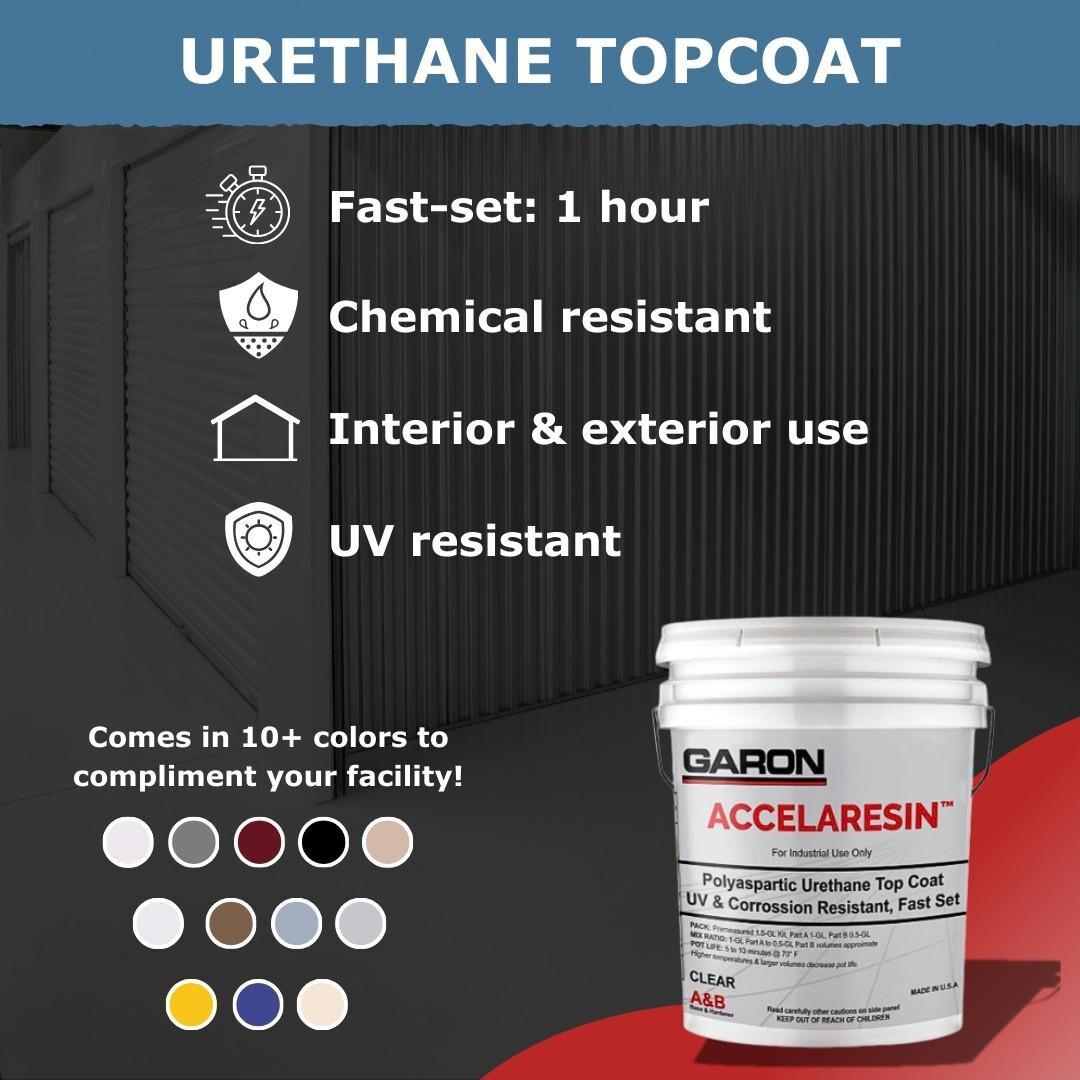
Product Spotlight: Garon’s ACCELARESIN™ Urethane Polyaspartic Topcoat
For professional-grade concrete protection, Garon’s ACCELARESIN™ stands out as a high-performance urethane polyaspartic topcoat engineered for demanding environments.
ACCELARESIN™ delivers:
- Exceptional abrasion resistance
- High-gloss, showroom-quality finish
- UV stability (non-yellowing)
- Fast return-to-service times
- Superior chemical resistance
- Long-term durability in residential and commercial settings
As a urethane polyaspartic concrete coating, ACCELARESIN™ combines the strength of polyurethane with the rapid curing benefits of polyaspartic technology.
It’s ideal for:
- Garage floors
- Basement floors
- Warehouses
- Workshops
- Industrial concrete surfaces
This advanced coating technology provides industrial-grade protection while maintaining a sleek, high-gloss aesthetic.
The #1 Reason Concrete Floor Coatings Fail: Poor Surface Preparation
Even the best polyurethane coating will fail if applied to an improperly prepared surface.
Successful concrete floor prep for polyurethane coating requires:
- Removing oil, grease, and contaminants
- Ensuring proper surface profile and porosity
- Performing a moisture and absorption test
The Water Drop Test
Place a few drops of water on the concrete:
- If it absorbs within 60 seconds → the surface is ready
- If it beads up → the concrete must be etched or mechanically prepared
Skipping proper prep is the leading cause of peeling and coating failure.
How to Apply a Polyurethane or Polyaspartic Concrete Floor Coating
Applying polyurethane correctly ensures maximum durability and adhesion.
Step 1: Proper Surface Preparation
Ensure the floor is clean, dry, and properly profiled.
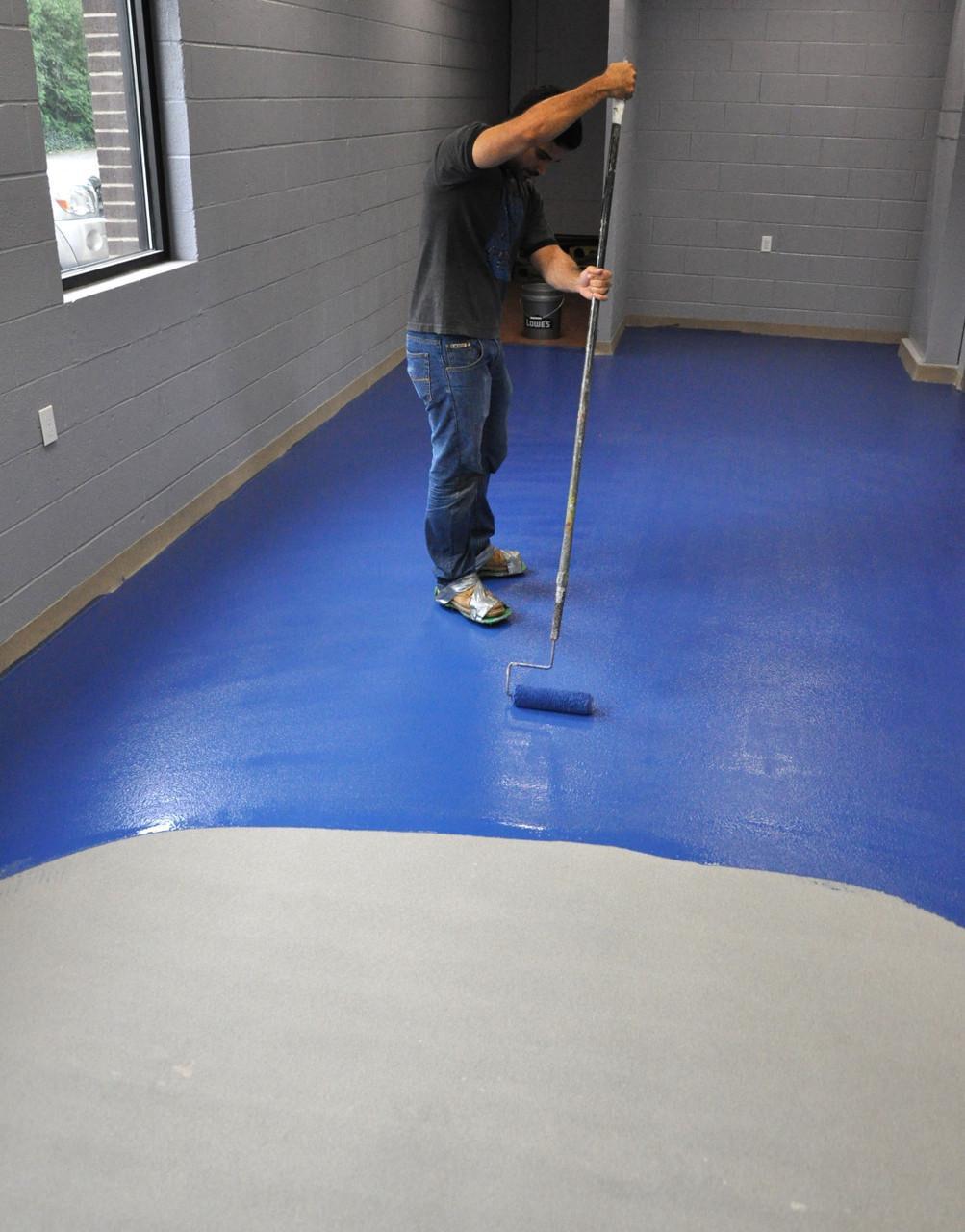
Step 2: Apply Thin, Even Coats
Use a 3/8" nap roller and apply a thin, consistent coat. Avoid heavy application.
Step 3: Follow Manufacturer Cure Times
Polyaspartic systems like ACCELARESIN™ often allow significantly faster return-to-service compared to traditional coatings.
Two thin coats provide better performance and adhesion than one thick coat.
Long-Term Benefits of a Polyurethane Concrete Floor
A durable concrete floor coating provides:
- Easy maintenance
- Improved light reflectivity
- Increased property value
- Lower long-term repair costs
- Long-lasting protection against wear and chemicals
Winter snow melt wipes away cleanly instead of soaking in. Oil spills stay on the surface instead of becoming permanent stains. That’s the daily benefit of sealing your concrete floor.
Final Verdict: What Is the Best Polyurethane for Concrete Floors?
If you want maximum durability, UV stability, chemical resistance, and long-term performance, a urethane polyaspartic topcoat like Garon’s ACCELARESIN™ is one of the best polyurethane solutions available.
When applied over properly prepared concrete, ACCELARESIN™ delivers:
- Industrial-grade protection
- High-gloss showroom aesthetics
- Superior scratch resistance
- Long-lasting performance in high-traffic environments
For garages, basements, warehouses, industrial and commercial spaces, polyurethane — particularly advanced polyaspartic systems — is the clear winner.
Not sure which repair products are right for you?
Contact our team today.