What Is Polyurethane and Why It’s Used on Concrete Floors
Concrete is a porous material that releases fine dust and absorbs liquids such as oil, water, and chemicals when left unsealed. In residential, commercial, and industrial settings, polyurethane‑based concrete floor coatings are commonly used to reduce dusting, improve cleanability, and protect concrete from wear and staining.
Polyurethane coatings form a flexible protective layer over cured concrete. Unlike rigid coatings, polyurethane systems accommodate minor substrate movement and temperature variation, making them suitable for many interior concrete floor applications.
Why Unsealed Concrete Floors Dust and Stain
Unsealed concrete contains microscopic pores that allow moisture and contaminants to penetrate the surface. Over time, this leads to staining, surface deterioration, and continuous concrete dusting.
When properly installed, polyurethane floor coatings are used to:
- Reduce concrete dusting
- Limit absorption of oils, chemicals, and moisture
- Improve abrasion resistance
- Make floors easier to clean and maintain
Sealing concrete floors is primarily a protective measure, not a cosmetic one.
Polyurethane vs. Epoxy vs. Paint for Concrete Floors
Facility managers and property owners often compare paint, epoxy, and polyurethane when selecting a concrete floor coating.
- Concrete Floor Paint
- Easy to apply
- Budget-friendly
- Prone to peeling and hot-tire pickup
- Limited durability
Standard paints are generally unsuitable for floors exposed to vehicle traffic or temperature changes
- Epoxy Floor Coatings
- Thick, rigid surface
- Good chemical resistance
- Can fill minor surface imperfections
In some environments, epoxy coatings may crack, chip, or discolor over time, particularly where temperature fluctuations or UV exposure are present.
-
Polyurethane and Polyaspartic Coatings
Polyurethane‑based systems, including polyaspartic topcoats, are frequently selected for:
- Flexibility under traffic and impact
- Scratch and abrasion resistance
- UV stability (non‑yellowing)
- Faster return‑to‑service compared to many epoxies
Performance depends on surface preparation, coating thickness, and exposure conditions.
Where Polyurethane Floor Coatings Are Commonly Used
Polyurethane concrete floor coatings are widely used in:
- Garages and workshops
- Warehouses and distribution centers
- Commercial and light‑industrial spaces
- Basements and interior utility areas
These environments benefit from polyurethane’s balance of durability, flexibility, and chemical resistance.
Performance Considerations for Polyurethane Concrete Floors
When evaluating polyurethane for concrete floors, key factors include:
- Traffic level (foot traffic vs. forklifts or vehicles)
- Exposure to oils, cleaners, or chemicals
- Moisture conditions within the concrete slab
- Cure time requirements
In controlled interior environments, properly installed polyurethane floor coatings can provide multi‑year performance. Actual service life varies based on operating conditions and maintenance practices.
Limitations of Polyurethane Floor Coatings
Polyurethane coatings are not ideal for every application.
They may not be the best choice for:
- Areas with constant moisture vapor transmission
- Floors exposed to extreme thermal shock
- Actively moving or structurally compromised slabs
In these conditions, alternative systems such as cementitious urethane or engineered concrete resurfacing materials may be more appropriate. Proper surface preparation and substrate evaluation are critical to coating performance.
Product Spotlight: Garon’s ACCELARESIN™ Urethane Polyaspartic Topcoat
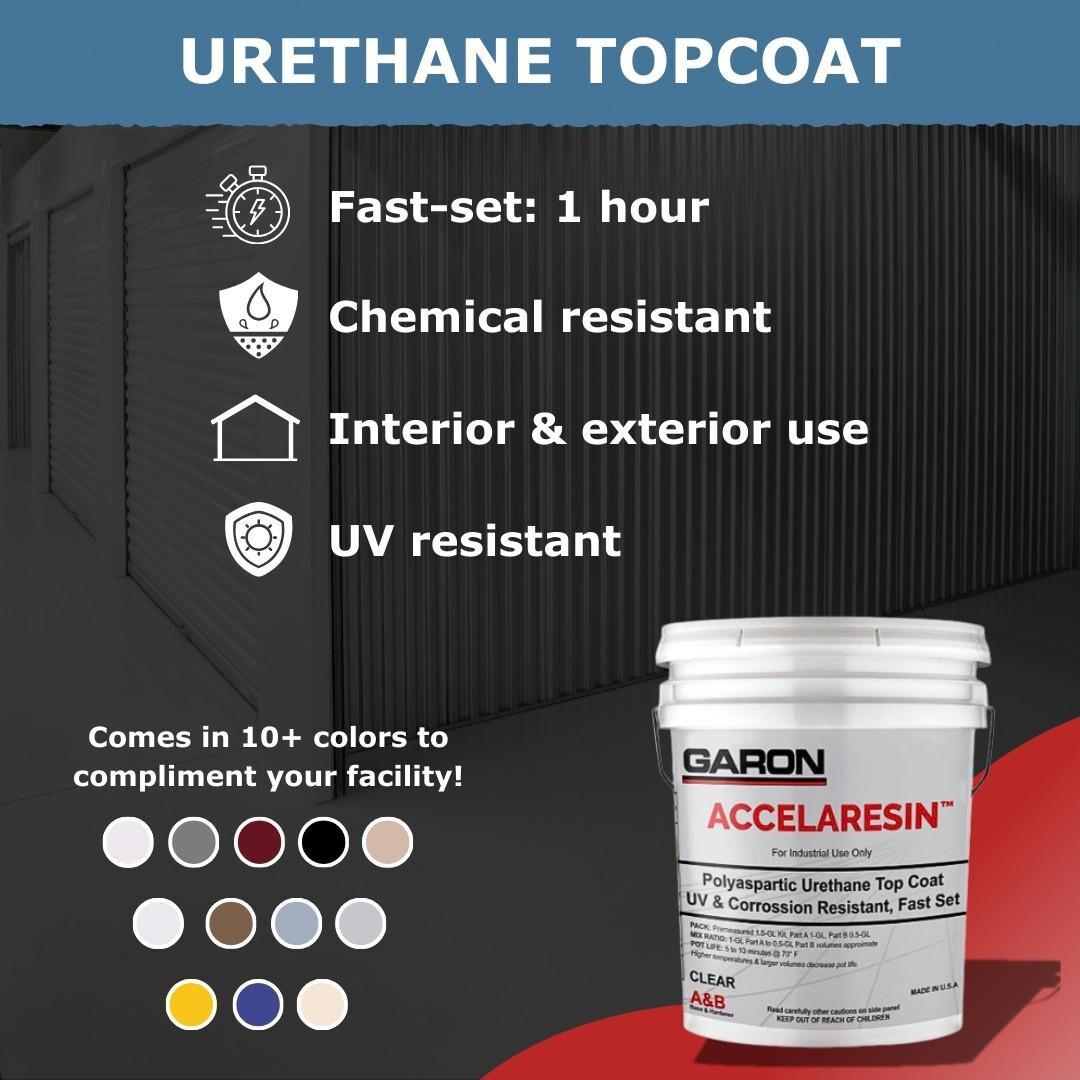
For professional-grade concrete protection, Garon’s ACCELARESIN™ stands out as a high-performance urethane polyaspartic topcoat engineered for demanding environments.
ACCELARESIN™ delivers:
- Exceptional abrasion resistance
- High-gloss, showroom-quality finish
- UV stability (non-yellowing)
- Fast return-to-service times
- Superior chemical resistance
- Long-term durability in residential and commercial settings
As a urethane polyaspartic concrete coating, ACCELARESIN™ combines the strength of polyurethane with the rapid curing benefits of polyaspartic technology.
It’s ideal for:
- Garage floors
- Basement floors
- Warehouses
- Workshops
- Industrial concrete surfaces
This advanced coating technology provides industrial-grade protection while maintaining a sleek, high-gloss aesthetic.
The #1 Reason Concrete Floor Coatings Fail: Poor Surface Preparation
Even the best polyurethane coating will fail if applied to an improperly prepared surface.
Successful concrete floor prep for polyurethane coating requires:
- Removing oil, grease, and contaminants
- Ensuring proper surface profile and porosity
- Performing a moisture and absorption test
The Water Drop Test
Place a few drops of water on the concrete:
- If it absorbs within 60 seconds → the surface is ready
- If it beads up → the concrete must be etched or mechanically prepared
Skipping proper prep is the leading cause of peeling and coating failure.
How to Apply a Polyurethane or Polyaspartic Concrete Floor Coating
Applying polyurethane correctly ensures maximum durability and adhesion.
Step 1: Proper Surface Preparation
Ensure the floor is clean, dry, and properly profiled.
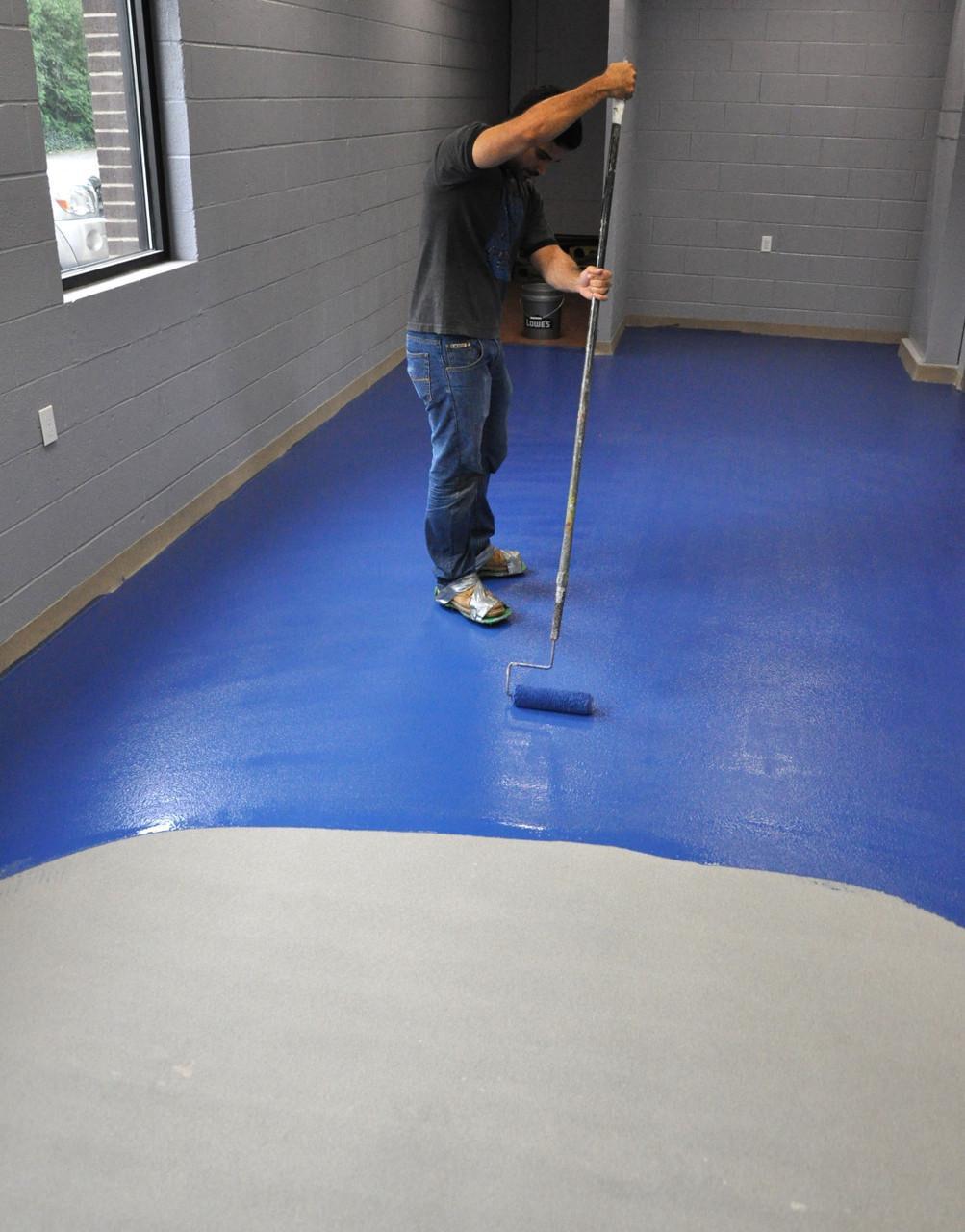
Step 2: Apply Thin, Even Coats
Use a 3/8" nap roller and apply a thin, consistent coat. Avoid heavy application.
Step 3: Follow Manufacturer Cure Times
Polyaspartic systems like ACCELARESIN™ often allow significantly faster return-to-service compared to traditional coatings.
Two thin coats provide better performance and adhesion than one thick coat.
Long-Term Benefits of a Polyurethane Concrete Floor
A durable concrete floor coating provides:
- Easy maintenance
- Improved light reflectivity
- Increased property value
- Lower long-term repair costs
- Long-lasting protection against wear and chemicals
Winter snow melt wipes away cleanly instead of soaking in. Oil spills stay on the surface instead of becoming permanent stains. That’s the daily benefit of sealing your concrete floor.
So, What Is the Best Polyurethane for Concrete Floors?
There is no single polyurethane coating that is best for every concrete floor. The most suitable system depends on:
- Floor use and traffic
- Environmental exposure
- Desired cure time
- Maintenance expectations
Polyurethane and polyaspartic coatings are often selected for applications where flexibility, UV resistance, and long‑term durability are required, while other coating or resurfacing systems may be better suited for more demanding conditions.
Not sure which repair products are right for you?
Contact our team today.