Heavy-Duty Epoxy Mortars for Industrial and Commercial Space
Introduction
Built to outperform traditional cement-based mortars, epoxy mortars for concrete deliver an unmatched combination of strength, durability, and long-term protection. Engineered for demanding environments, epoxy mortar material is formulated using a precise blend of epoxy resins, curing agents (hardeners), and graded mineral fillers. This advanced composition creates an exceptionally strong bonding system that permanently adheres to concrete surfaces.
Unlike conventional mortars that can crack, shrink, or fail under stress, epoxy mortar systems are specifically designed to restore, repair, and protect damaged concrete where traditional solutions fall short. Their non-shrink properties and high load-bearing capacity make them ideal for both structural and surface repairs.
Why Choose Epoxy Mortar Over Traditional Mortar?
Epoxy mortars provide several performance advantages that make them the preferred choice for professional concrete repair and industrial applications:
- Superior Adhesion: Bonds aggressively to existing concrete, steel, and masonry substrates
- High Compressive and Tensile Strength: Supports heavy loads and structural stress
- Chemical and Impact Resistance: Withstands exposure to oils, solvents, acids, and heavy machinery
- Low Permeability: Resists moisture intrusion, reducing long-term deterioration
- Fast Cure Times: Minimizes downtime in commercial and industrial settings
What is an Epoxy Mortar?
An epoxy mortar is a heavy-duty concrete repair solution that delivers superior strength, chemical resistance, and long-lasting durability for industrial floors, joints, and high-traffic areas.
In high-traffic environments like warehouses, factories, and food processing facilities, uneven or damaged concrete floors increase the risk of accidents, injuries, and costly downtime. Epoxy mortars provide a fast, durable solution for concrete floor repair, delivering a seamless, level, and chemical-resistant surface that keeps operations safe, efficient, and compliant.
Industries That Rely on Epoxy Mortars
- Industrial Flooring Repairs – Fixing spalled joints, eroded slabs, and damaged warehouse floors with high-strength, impact-resistant epoxy mortar.
- Chemical Processing Plants – Flooring and trench repairs where acid-resistant epoxy mortars are essential to withstand corrosive chemicals and high temperatures.
- Food & Beverage Industry – USDA/FDA-approved epoxy mortars used in dairies, breweries, commercial kitchens, and bottling plants for hygienic, non-porous surfaces.
- Marine & Water Facilities – Repairing dams, piers, tunnels, wastewater plants, and containment areas where moisture resistance and structural integrity are critical.
- Parking Structures & Garages – Durable against vehicle traffic, salt, and de-icing chemicals, providing long-term protection for concrete decks and ramps.
- Educational & Institutional Facilities – Long-lasting, low-maintenance epoxy flooring for schools, universities, and public buildings with high foot traffic.
- Pharmaceutical & Healthcare Facilities – Seamless, sterile surfaces ideal for clean rooms, labs, and hospitals where contamination control is vital.
- Manufacturing Plants – Heavy-duty flooring and equipment base repairs that resist abrasion, vibration, and chemical spills.
- Cold Storage & Freezers – Epoxy mortars that cure in low temperatures, used for repairing floors in refrigerated environments.
- Retail & Commercial Spaces – Decorative epoxy mortar systems that combine durability with aesthetic appeal for showrooms, malls, and storefronts.
How to Apply Epoxy Mortars
Applying epoxy mortar is quick and straightforward, making it a reliable solution for concrete repair and floor patching in industrial and commercial spaces. Follow these simple steps:
- Mix the Epoxy Mortar
Combine the epoxy resin and hardener with the aggregate as directed. Mix thoroughly until you achieve a smooth, uniform consistency. Proper mixing ensures the strength, adhesion, and durability of the repair. - Pour the Mortar
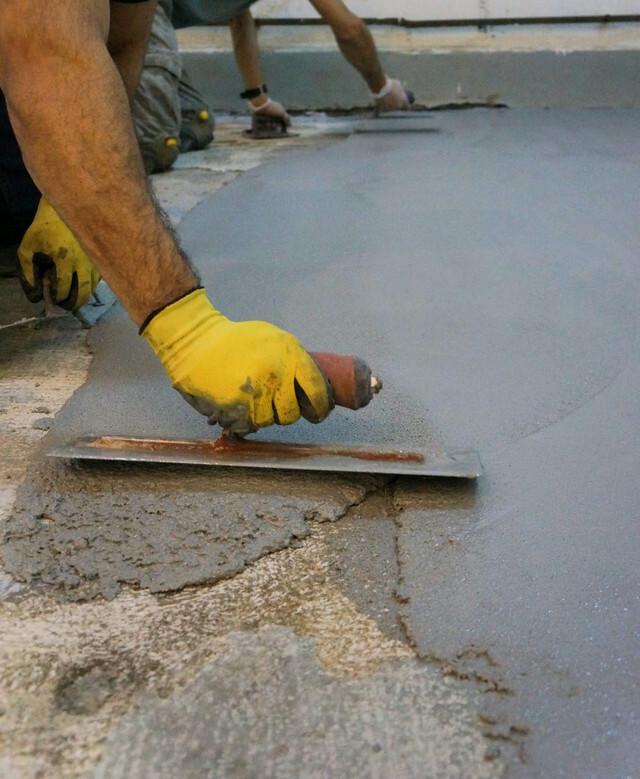
Once mixed, pour the epoxy mortar directly into cracks, holes, or damaged areas of concrete. For larger repairs, spread the material evenly across the surface. Epoxy mortar’s self-leveling and fast-curing properties help reduce downtime. - Spread and Smooth
Use a trowel or spreader to smooth the mortar over the repair area, making it level with the surrounding floor. This step creates a seamless, durable surface that can handle heavy traffic, machinery, and chemical exposure once cured.
Garon's Epoxy Mortar Concrete Repair Solutions
|
TREFLITE™ Epoxy Mortar Patch/Resurfacer
|
|
ARCTIC FREEZITE™ Epoxy Mortar Patch/Resurfacer
|
FAQS for Epoxy Mortars
FAQ 1: What is an epoxy mortar vs. a cement mortar?
Epoxy mortar is a high-strength, chemical-resistant bonding material made from epoxy resin and sand, ideal for industrial and harsh environments. Cement mortar, composed of cement, sand, and water, is more economical and widely used in general construction but lacks the durability and resistance of epoxy mortar.
FAQ 2: What is an epoxy mortar used for?
Epoxy mortar is commonly used for industrial flooring, chemical-resistant surfaces, repairing concrete structures, and bonding tiles or stones in environments exposed to heavy loads, moisture, or corrosive substances. Its durability and resistance to chemicals make it ideal for factories, commercial kitchens, laboratories, and wastewater treatment plants.
FAQ 3: Can an epoxy mortar be used on tile?
Yes, epoxy mortar can be used on tile.
You May Also Be Interested In: