Understanding Moisture Sensitivity in Concrete Sealers for Industrial Applications
In industrial and commercial environments, concrete floors are exposed to constant traffic, heavy equipment, chemicals, and moisture vapor pressure. While concrete sealers are essential for protecting these surfaces, moisture sensitivity is one of the most common — and costly — causes of coating failure in industrial facilities.
Moisture-related failures can lead to unplanned downtime, safety hazards, rework costs, and shortened floor system life. Understanding how moisture affects concrete sealers — and how to control it — is critical for selecting coatings that perform reliably in warehouses, manufacturing plants, distribution centers, garages, and utility spaces.
This guide explains moisture sensitivity in concrete sealers from an industrial perspective, including how to evaluate moisture conditions, prevent failures, and select high-performance sealer systems built for demanding environments.

Why Concrete Sealers Matter in Industrial Facilities
Concrete sealers are not cosmetic upgrades in industrial settings — they are protective systems designed to preserve structural integrity, improve safety, and reduce long-term maintenance costs.
Industrial Benefits of Concrete Sealers
- Reduce moisture penetration and vapor-related damage
- Protect against oils, chemicals, and industrial contaminants
- Minimize dusting that affects air quality and equipment
- Improve cleanability and sanitation
- Extend service life of concrete slabs
- Support safety and compliance requirements
Unsealed or poorly sealed concrete is vulnerable to spalling, cracking, chemical attack, and surface breakdown, all of which increase operational risk and repair expenses.
Are Concrete Sealers Moisture Sensitive in Industrial Settings?
Yes — and moisture sensitivity is magnified in industrial environments due to slab thickness, ground contact, temperature swings, and hydrostatic pressure.
Moisture sensitivity refers to a sealer’s ability (or inability) to perform when moisture vapor transmission (MVT) or internal slab moisture is present during or after application.
Factors That Increase Moisture Risk in Facilities
- On-grade or below-grade slabs
- Older concrete without vapor barriers
- New construction with incomplete curing
- Wash-down areas or high humidity zones
- Seasonal groundwater fluctuations
Ignoring these conditions often results in premature coating failure.
Types of Concrete Sealers and Their Moisture Performance
Understanding how different sealer types behave under moisture pressure is essential for industrial buyers.
Penetrating Concrete Sealers
Penetrating sealers migrate into the concrete matrix and react internally rather than forming a surface film.
Moisture Sensitivity: Low
Industrial Use Cases: Exterior slabs, loading areas, breathable applications
These sealers allow vapor transmission while repelling liquid water, making them useful where surface coatings are not required.
Film-Forming Concrete Sealers
Film-forming sealers create a continuous protective layer on the surface.
Moisture Sensitivity: Moderate to high (without mitigation)
Examples: Acrylics, epoxies, urethanes
In industrial environments, vapor pressure beneath film-forming coatings can cause blistering or delamination if moisture is not properly addressed beforehand.
High-Performance / Industrial Sealers
These sealers are engineered for abrasion resistance, chemical exposure, and long service life.
Moisture Sensitivity: Low when installed as part of a system
Use Cases: Warehouses, manufacturing floors, garages, logistics hubs
Performance depends heavily on substrate evaluation and moisture control.
Moisture-Related Failures That Impact Operations
Moisture-driven coating failures are not just cosmetic — they disrupt operations and increase risk.
Common Industrial Sealer Failures
- Blistering: Vapor pressure forms bubbles under the coating
- Delamination: Loss of adhesion due to moisture migration
- Clouding or whitening: Moisture interferes with curing
- Accelerated wear: Reduced coating lifespan
Each failure increases maintenance costs and may require shutdowns for remediation.
How Industrial Facilities Should Test Concrete for Moisture
Moisture testing is a non-negotiable step before installing any industrial concrete sealer.
Recommended Moisture Testing Methods
- Plastic Sheet Test: Quick surface indicator
- Moisture Meters: Fast, non-destructive screening
- Advanced Testing (when required): MVER or RH testing for critical installations
Facilities should document moisture readings to support product selection and warranty compliance.
Controlling Moisture Before Sealer Application
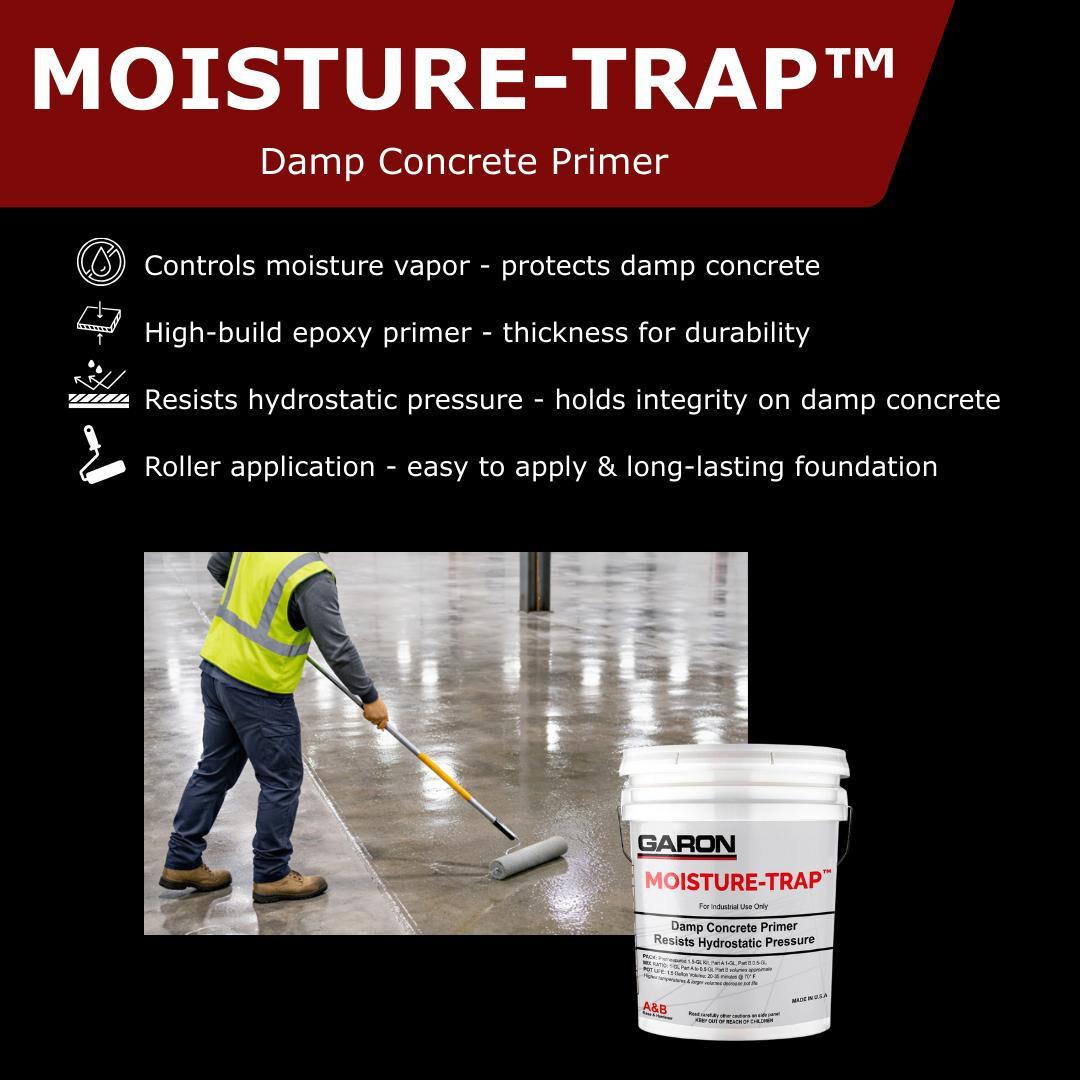
Many industrial slabs cannot be fully dried due to environmental or structural constraints. In these cases, moisture-control primers are essential.
Moisture-Control Epoxy Primers
These primers are designed to:
- Suppress moisture vapor transmission
- Resist hydrostatic pressure
- Provide a stable bonding surface for industrial sealers
Moisture Trap™ Damp Concrete Epoxy Primer is engineered specifically for slabs with elevated moisture, allowing film-forming sealers to perform reliably in environments where traditional coatings would fail. This step is often the difference between a system that lasts years versus one that fails in months.
Industrial-Grade Concrete Sealers That Perform Under Real Conditions
Once moisture is properly managed, selecting the right sealer ensures durability, safety, and long-term value.
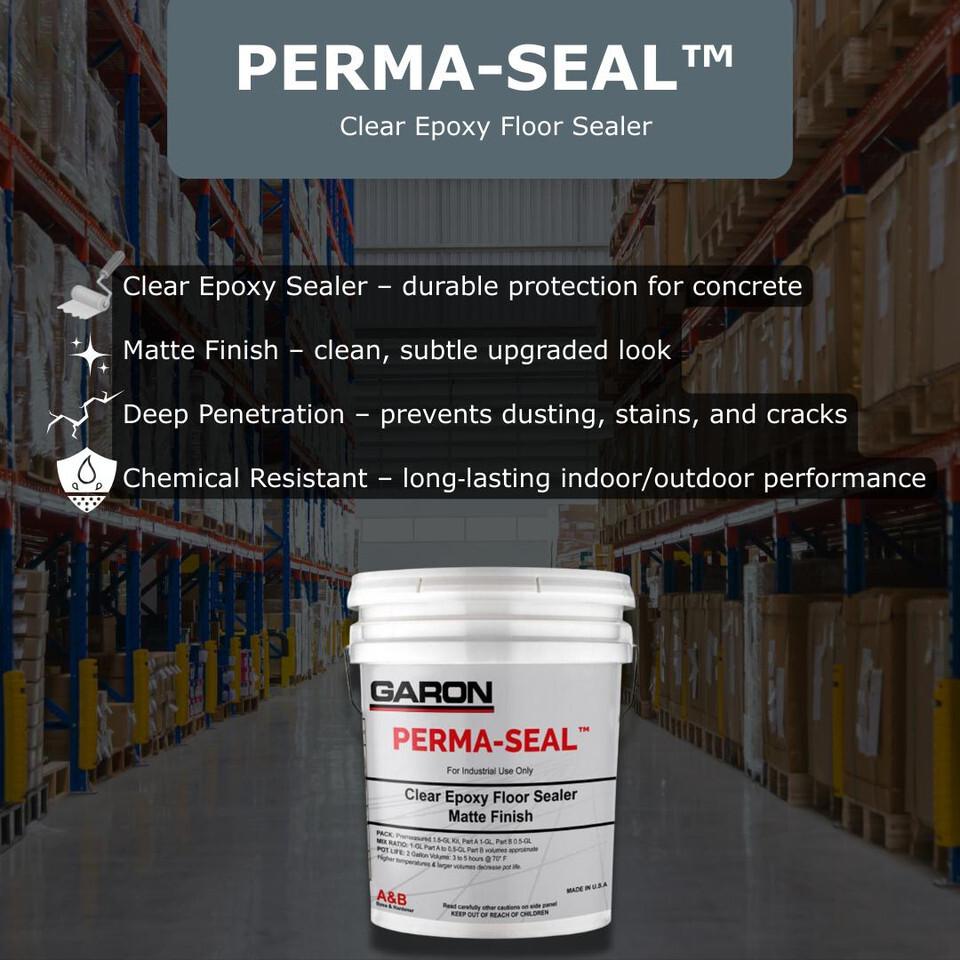
PERMA-SEAL™ Clear Epoxy Floor Sealer
PERMA-SEAL™ is designed for industrial durability and slab preservation.
Why industrial buyers choose it:
- Penetrates and seals concrete to reduce dusting
- Resists abrasion, chemicals, and industrial traffic
- Maintains a clean, matte finish without slipperiness
- Reduces long-term maintenance and recoat frequency
Common applications include warehouses, production floors, and service areas.
TIGERSKIN™ Water-Based Epoxy Floor Sealer
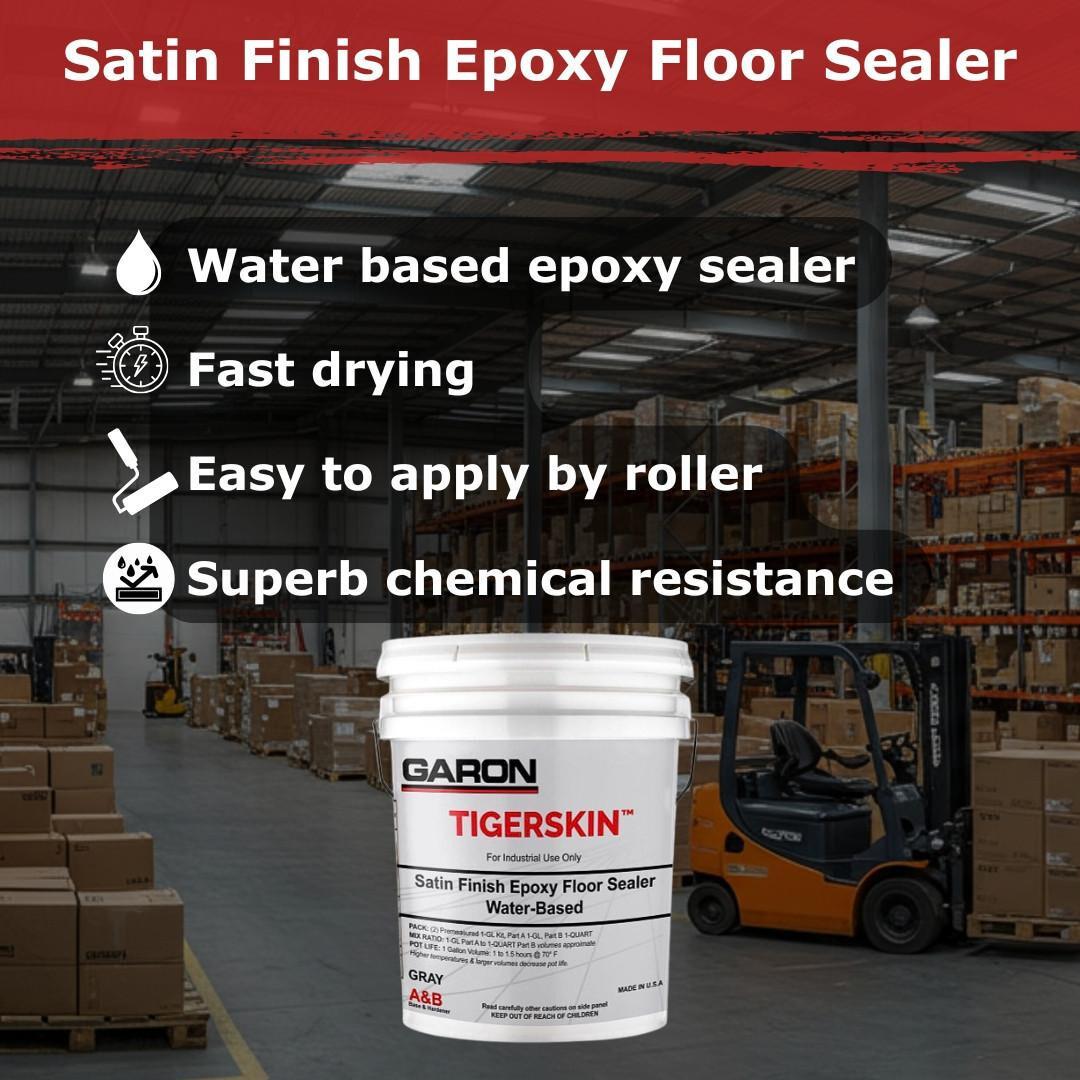
TIGERSKIN™ balances performance with application efficiency.
Why it works in active facilities:
- Water-based formulation allows use in occupied buildings
- Chemical and abrasion resistance for daily operations
- Satin finish improves visibility and cleanliness
- Faster turnaround reduces downtime
Ideal for logistics centers, utility rooms, and maintenance areas.
CONCORD™ Urethane-Modified Alkyd Floor Sealer
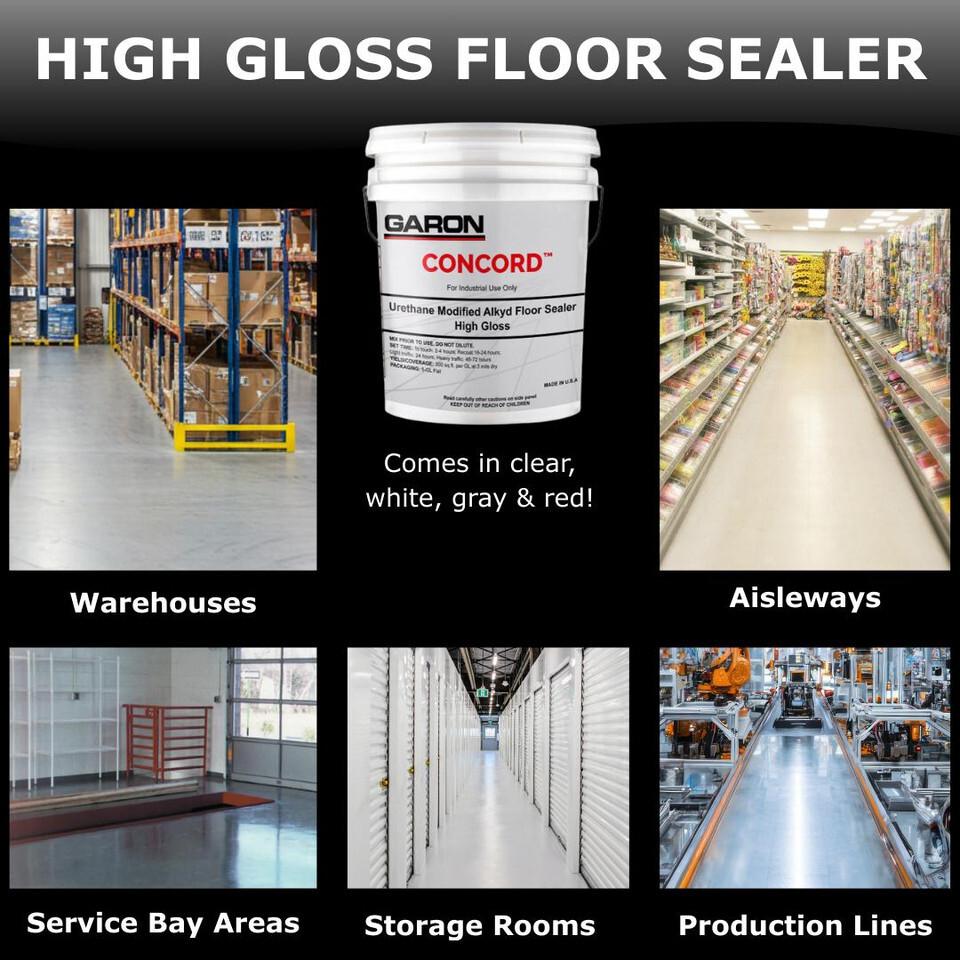
CONCORD™ is selected when appearance and durability must coexist.
Why facilities use it:
- Dense, abrasion-resistant surface
- High-gloss finish for showrooms or public-facing spaces
- Easy to clean and maintain
- Good resistance to light chemical exposure
Often used in commercial-industrial hybrids such as showrooms, labs, and controlled environments.
Best Practices for Industrial Concrete Sealer Installation
To maximize ROI and coating lifespan:
- Conduct moisture testing before installation
- Use moisture-control primers when required
- Mechanically clean and prepare the surface
- Apply sealers in controlled conditions
- Follow manufacturer cure schedules strictly
- Plan installations to minimize operational disruption
A system-based approach reduces risk and ensures predictable performance.
Frequently Asked Questions From Industrial Buyers
FAQ 1: Can sealers completely block moisture vapor?
No. Moisture must be managed with proper primers and system design.
FAQ 2: What causes industrial floor coatings to fail early?
Unaddressed moisture, poor surface prep, and incompatible products.
FAQ 3: How do we choose the right system?
Evaluate slab conditions, traffic loads, chemical exposure, and uptime requirements.
Conclusion: Industrial Concrete Protection Requires a System Approach
In industrial environments, concrete sealing is not a one-product decision — it’s a performance system. Moisture sensitivity must be addressed first, followed by selecting sealers engineered for the facility’s operational demands.
By combining moisture testing, moisture-control primers, and proven industrial sealers like PERMA-SEAL™, TIGERSKIN™, and CONCORD™, facilities can reduce downtime, extend floor life, and protect their investment.
For industrial buyers, the right concrete sealer system is not an expense — it’s risk mitigation.
Not sure which repair products are right for you?
Contact our team today.