Understanding Moisture Sensitivity in Concrete Sealers
Introduction
Moisture is one of the leading causes of concrete sealer and floor coating failure. When excess moisture vapor moves through a concrete slab, it can reduce adhesion, cause blistering, create discoloration, and shorten the service life of the coating.
For industrial and commercial facilities, understanding moisture sensitivity is essential before applying a concrete sealer. Proper moisture testing, surface preparation, and product selection help prevent premature failures, reduce maintenance costs, and extend the life of concrete floors.
This guide explains how moisture affects concrete sealers, why some systems perform better than others, and how to select a sealer system that matches your facility's operating conditions.

Quick Answer
Moisture sensitivity refers to how well a concrete sealer performs when moisture is present within the concrete slab before, during, or after installation.
If excessive moisture is trapped beneath a film-forming sealer, it can cause blistering, peeling, whitening, or delamination. Moisture testing and selecting compatible primers and sealers help minimize these risks and improve long-term coating performance.
Why Concrete Sealers Matter in Industrial Facilities
Concrete sealers do more than improve appearance. In industrial and commercial environments, they protect concrete from moisture, chemicals, abrasion, and daily wear while reducing long-term maintenance requirements.
A properly selected concrete sealer can help:
- Reduce concrete dusting
- Resist oils and chemicals
- Improve abrasion resistance
- Simplify cleaning and sanitation
- Reduce moisture intrusion
- Extend concrete service life
- Improve workplace safety by maintaining a durable surface
Without adequate protection, concrete is more susceptible to staining, chemical attack, spalling, surface deterioration, and costly repairs.
What Is Moisture Sensitivity in a Concrete Sealer?
Concrete naturally contains moisture. Even fully cured slabs continue releasing water vapor over time. When moisture cannot escape through a surface coating, pressure builds beneath the sealer, eventually weakening the bond between the coating and the concrete.
Moisture sensitivity becomes especially important in facilities with:
- On-grade concrete slabs
- Below-grade floors
- Older buildings without vapor barriers
- New construction that has not fully dried
- Washdown or food-processing areas
- High-humidity environments
- Facilities exposed to groundwater or hydrostatic pressure
Evaluating slab moisture before installation helps determine whether a breathable sealer or a moisture-control system is the better solution.
Common Moisture-Related Terms
Moisture Vapor Transmission (MVT)
Moisture vapor transmission (MVT) is the movement of water vapor through a concrete slab toward the surface. High moisture vapor transmission can interfere with film-forming coatings and reduce adhesion.
Hydrostatic Pressure
Hydrostatic pressure occurs when groundwater beneath a slab pushes moisture upward through the concrete. This pressure can contribute to blistering and coating failure if not properly addressed.
Relative Humidity (RH)
Relative humidity testing measures the internal moisture condition of a concrete slab. RH testing is commonly specified for industrial flooring projects because it provides a reliable indication of long-term moisture conditions.
How Moisture Causes Concrete Sealer Failure
When moisture vapor becomes trapped beneath a film-forming coating, pressure develops between the concrete and the sealer. Over time, this pressure weakens adhesion and shortens coating life.
Common moisture-related failures include:
Blistering
Water vapor creates pressure beneath the coating, producing bubbles or raised areas.
Delamination
The coating loses adhesion and separates from the concrete surface.
Clouding or Whitening
Moisture interferes with curing, producing a hazy or milky appearance.
Premature Wear
Poor adhesion causes coatings to wear faster under forklift traffic and heavy equipment.
These failures often require surface preparation and complete recoating, increasing maintenance costs and facility downtime.
Which Types of Concrete Sealers Handle Moisture Best?
Different sealer technologies respond differently to moisture conditions.
|
Sealer Type |
Breathable |
Chemical Resistance |
Moisture Tolerance |
Typical Applications |
|
Penetrating Sealer |
Yes |
Moderate |
High |
Exterior slabs, sidewalks, loading docks |
|
Acrylic Sealer |
Limited |
Low to Moderate |
Moderate |
Decorative concrete, light-duty areas |
|
Epoxy Sealer |
No |
High |
Requires moisture testing |
Warehouses, manufacturing plants |
|
Water-Based Epoxy |
Limited |
High |
Moderate |
Commercial and institutional facilities |
|
Epoxy System with Moisture-Control Primer |
No |
High |
High when properly installed |
Industrial manufacturing and distribution facilities |
Penetrating Concrete Sealers
Penetrating sealers absorb into the concrete rather than creating a surface film. Because they allow moisture vapor to escape while repelling liquid water, they are commonly used where breathability is important.
Film-Forming Concrete Sealers
Film-forming sealers, including acrylics, epoxies, and urethanes, create a protective surface layer. These systems typically require acceptable slab moisture levels or a compatible moisture-control primer before installation.
How Should Concrete Be Tested Before Applying a Sealer?
Moisture testing should be completed before installing any film-forming concrete sealer.
Common testing methods include:
- Plastic sheet testing for preliminary evaluation
- Electronic concrete moisture meters for quick screening
- Moisture Vapor Emission Rate (MVER) testing
- In-situ Relative Humidity (RH) testing for critical flooring installations
Testing helps verify whether the slab meets the moisture requirements specified by the coating manufacturer.
Documenting moisture test results also supports quality control and may be required for certain product warranties.
Real-World Example
Consider a warehouse floor scheduled to receive an epoxy floor sealer. Although the concrete appears dry on the surface, elevated moisture vapor remains within the slab. Without moisture testing, the coating is installed directly onto the concrete.
Within several months, forklift traffic and continuous moisture vapor movement begin creating pressure beneath the coating. Blistering and delamination develop, requiring sections of the floor to be removed and recoated.
Had moisture testing been performed before installation, a moisture-control primer could have been specified, helping extend the service life of the flooring system while avoiding unnecessary downtime and repair costs.
Controlling Moisture Before Applying a Concrete Sealer
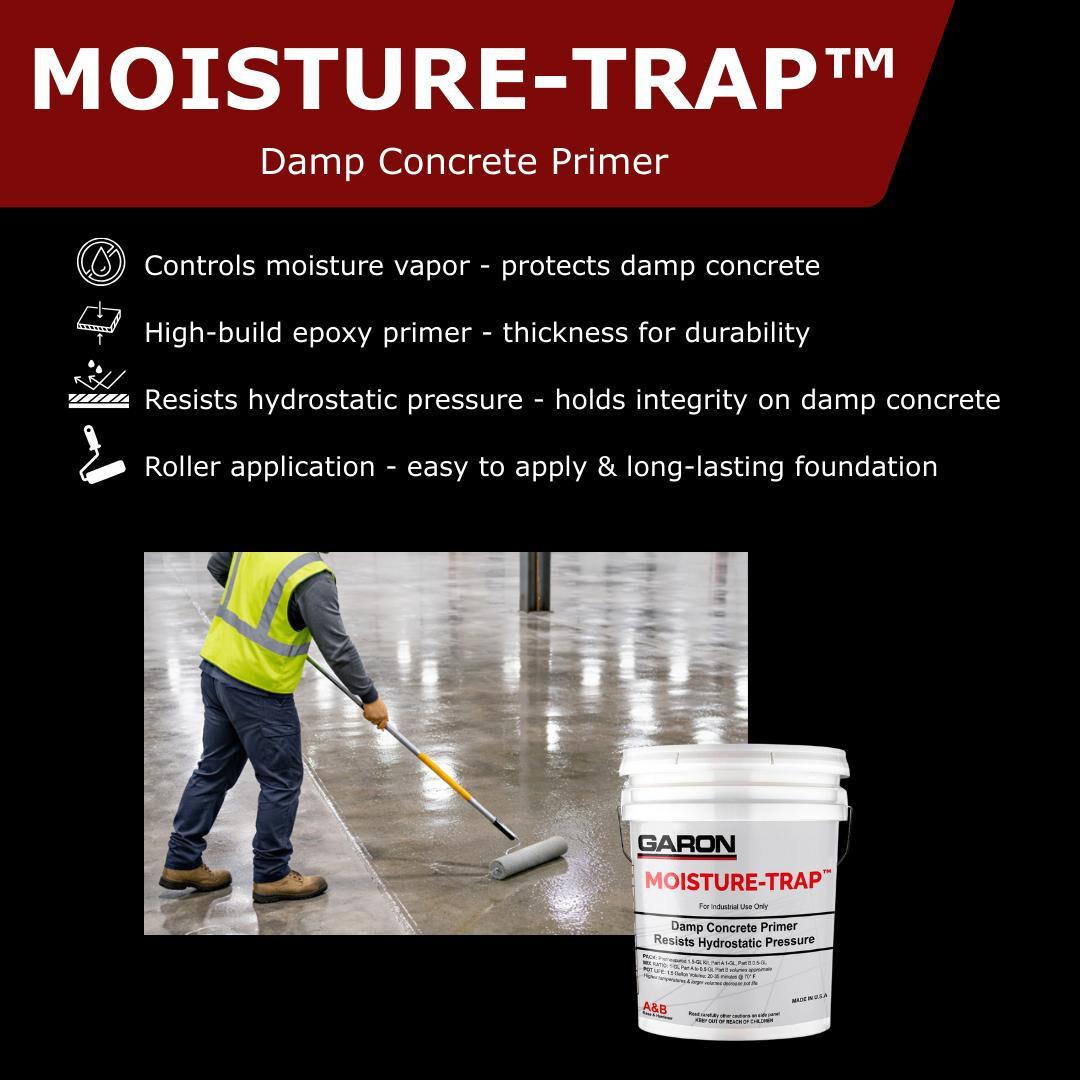
Many industrial slabs continuously release moisture and cannot be fully dried before installation. In these situations, moisture-control primers become an essential part of the flooring system.
Moisture-control epoxy primers are designed to:
- Reduce moisture vapor transmission
- Improve adhesion
- Resist hydrostatic pressure
- Create a stable substrate for subsequent coatings
For example, Moisture Trap™ Damp Concrete Epoxy Primer is designed for concrete with elevated moisture levels before applying compatible epoxy floor coating systems.
Using the correct primer often determines whether an industrial floor performs reliably for years or experiences early coating failure.
Choosing the Right Concrete Sealer for Industrial Facilities
Selecting the appropriate concrete sealer depends on moisture conditions, traffic levels, chemical exposure, maintenance requirements, and desired appearance.
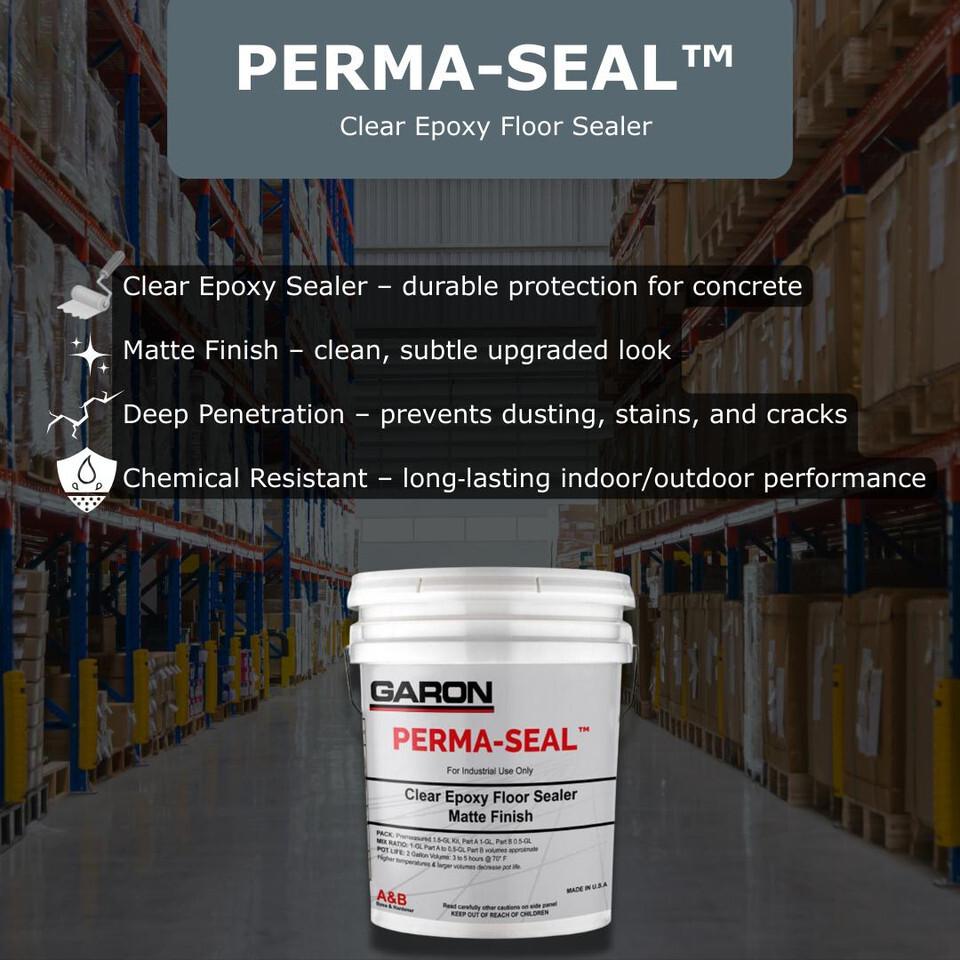
PERMA-SEAL™ Clear Epoxy Floor Sealer
PERMA-SEAL™ helps preserve concrete while maintaining its natural appearance.
Typical benefits include:
- Reduces concrete dusting
- Excellent abrasion resistance
- Chemical resistance
- Lower long-term maintenance
- Suitable for warehouses, production areas, and service facilities
TIGERSKIN™ Water-Based Epoxy Floor Sealer
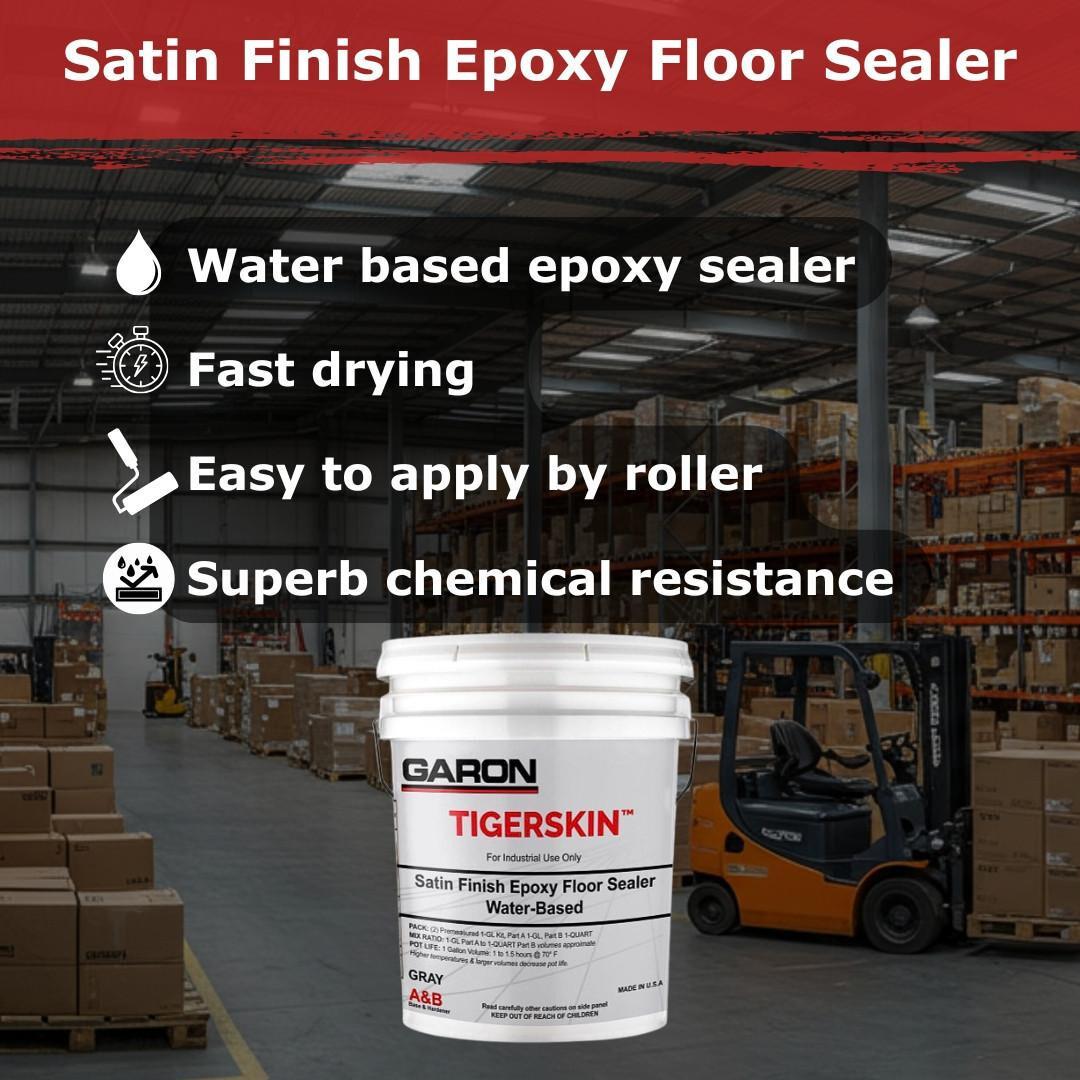
TIGERSKIN™ provides industrial performance with a water-based formulation suitable for occupied facilities.
Typical applications include:
- Manufacturing facilities
- Maintenance shops
- Utility rooms
- Distribution centers
Key advantages include:
- Low-odor water-based formulation
- Chemical resistance
- Abrasion resistance
- Improved cleanability
- Faster return to service than many traditional coating systems
CONCORD™ Urethane-Modified Alkyd Floor Sealer
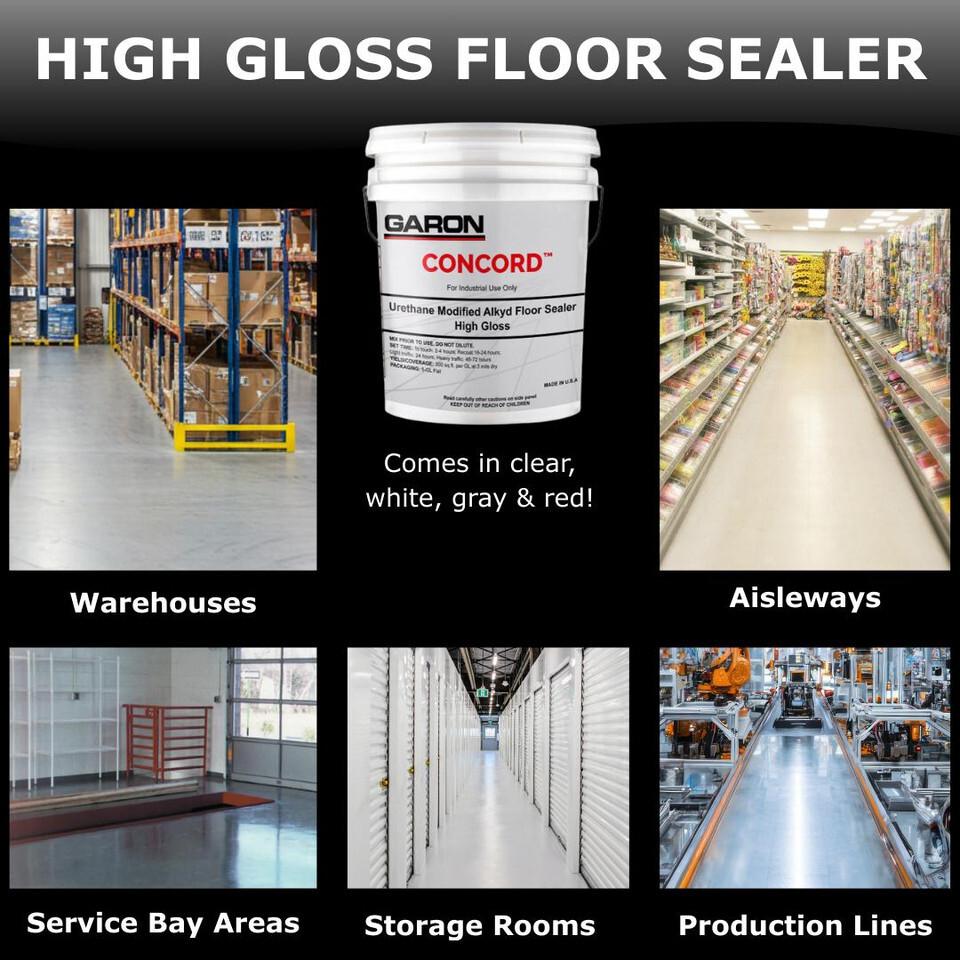
CONCORD™ is often selected where appearance and durability are equally important.
It offers:
- High-gloss finish
- Good abrasion resistance
- Easy maintenance
- Resistance to light chemical exposure
Typical applications include commercial facilities, laboratories, maintenance areas, and public-facing industrial spaces.
Best Practices for Installing Concrete Sealers
Following proven installation practices helps maximize coating performance and service life.
Recommended best practices include:
- Test the concrete for moisture.
- Repair cracks and surface defects before coating.
- Mechanically prepare the substrate.
- Use a moisture-control primer when required.
- Follow the manufacturer's installation conditions.
- Allow the coating to cure completely before returning the floor to service.
- Install compatible primers, sealers, and topcoats as a complete system.
Treating the floor as a complete system rather than a single-product helps reduce maintenance costs and improve long-term durability.
Key Takeaways
- Moisture vapor is one of the most common causes of concrete sealer failure.
- Moisture testing should be completed before applying film-forming sealers.
- Penetrating sealers allow vapor transmission, while epoxy sealers generally require moisture evaluation.
- Moisture-control primers help protect coatings installed over damp concrete.
- Selecting compatible primers and sealers extends floor life and reduces maintenance costs.
Frequently Asked Questions
Can a concrete sealer completely stop moisture vapor?
No. Most concrete sealers do not completely block moisture vapor. When elevated moisture is present, a compatible moisture-control primer may be necessary before applying a film-forming coating.
What causes concrete sealers to blister?
Blistering typically occurs when moisture vapor builds beneath the coating faster than it can escape. Poor surface preparation and improper product selection can also contribute to blistering.
Which concrete sealer performs best on damp concrete?
The best solution depends on the slab's moisture condition. Damp concrete often requires a moisture-control primer followed by a compatible industrial coating system rather than a sealer alone.
Should concrete always be moisture tested before sealing?
For industrial and commercial floor coatings, moisture testing is considered a best practice. Testing helps determine whether the slab meets the manufacturer's installation requirements and reduces the risk of premature coating failure.
What is the difference between a penetrating sealer and an epoxy sealer?
Penetrating sealers absorb into the concrete and allow moisture vapor to pass through, while epoxy sealers create a protective film on the surface. Epoxy systems generally provide greater chemical and abrasion resistance but require proper moisture evaluation before installation.
Need Help Choosing the Right Concrete Sealer?
Moisture management is one of the most important factors affecting the long-term performance of a concrete sealer. Testing the slab, selecting compatible primers, and choosing the appropriate sealer system help reduce coating failures, extend floor life, and lower maintenance costs.
If you're selecting a concrete sealer for a warehouse, manufacturing plant, commercial facility, or institutional building, the Garon Products team can help you identify a compatible primer and sealer system based on your project's moisture conditions, service environment, and performance requirements.