Concrete grout is used in industrial facilities to fill voids, support machinery and baseplates, anchor equipment, and repair areas where strength and load transfer are important. The appropriate grout depends on the application, required strength, placement method, operating conditions, and whether a cementitious or epoxy-based material is needed.
For facility managers, plant engineers, maintenance teams, and contractors, selecting the correct industrial grout can help provide stable equipment support, restore deteriorated concrete, and reduce the likelihood of movement or voids beneath structural components.
What Is Concrete Grout?
Concrete grout is a flowable or placeable material used to fill spaces, transfer loads, support equipment, anchor structural components, and complete certain concrete repairs.
Industrial grouts are commonly formulated as cementitious non-shrink grouts or epoxy grouts. These materials serve different purposes and should be selected according to the demands of the application.
Unlike conventional concrete repair materials, many grouts are designed to flow into confined spaces, such as beneath machinery baseplates or around anchor bolts, where complete contact and effective load transfer are important.
Typical industrial applications include:
- Machinery and equipment baseplates
- Anchor bolts
- Bearing plates
- Columns and structural supports
- Equipment foundations
- Voids and confined spaces
- Industrial concrete floor repairs
- Structural concrete maintenance
Why Is Grout Used Under Industrial Machinery?
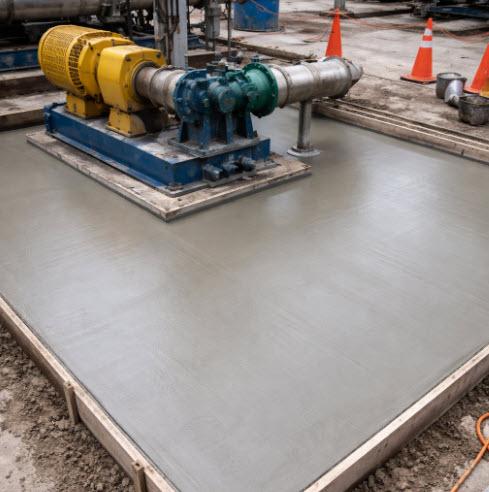
Grout is placed beneath machinery and equipment baseplates to fill the space between the baseplate and concrete foundation, creating continuous support and helping transfer equipment loads into the foundation.
Even a properly constructed concrete foundation may not provide complete contact with a steel machinery base. Grout fills irregularities and voids beneath the baseplate, creating a more uniform bearing surface.
This is particularly important for equipment subjected to substantial static loads or operating forces.
Depending on the equipment and application, machinery grout may need to provide:
- High compressive strength
- Dimensional stability
- Strong adhesion
- Resistance to vibration and dynamic loading
- Good flow around anchor bolts and beneath baseplates
- Resistance to chemicals or moisture
- Appropriate working and cure times
The equipment manufacturer's requirements and project specifications should always be considered when selecting grout for machinery installation.
Why Is Non-Shrink Grout Important?
Non-shrink grout is designed to maintain contact within the grouted space rather than creating gaps as the material cures.
For machinery bases, bearing plates, columns, and other load-bearing applications, gaps can interfere with uniform support and load transfer. A properly selected and installed non-shrink grout helps maintain contact between the supported component and its concrete foundation.
Non-shrink cementitious grouts are commonly used for:
- Machinery bases
- Anchor bolts
- Bearing plates
- Structural columns
- Precast components
- Equipment foundations
- Voids requiring a flowable cementitious material
Proper surface preparation, mixing, placement, and curing remain essential to grout performance.
Cementitious Grout vs. Epoxy Grout: What's the Difference?
Cementitious and epoxy grouts can both provide high-strength support, but their properties make them suitable for different industrial applications.
Cementitious Non-Shrink Grout
Cementitious grout is generally selected when a flowable, economical material is needed for equipment bases, anchor bolts, bearing plates, structural components, and general industrial grouting.
Typical characteristics may include:
- Non-shrink performance
- High compressive strength
- Flowable placement
- Compatibility with concrete
- Placement in relatively large volumes
- Controlled expansion, depending on the formulation
Epoxy Grout
Epoxy grout is typically considered for demanding machinery installations where high strength, adhesion, chemical resistance, or resistance to operational forces is required.
Typical applications include:
- Heavy machinery
- Pumps and compressors
- Equipment exposed to vibration
- Precision equipment bases
- Industrial processing equipment
- Applications exposed to oils or chemicals
The correct choice depends on equipment loads, operating environment, installation dimensions, chemical exposure, temperature, and engineering requirements.
Can Grout Be Used to Repair Industrial Concrete Floors?
Certain grouts can be used for industrial concrete repairs, but grout should not automatically be substituted for a dedicated concrete repair mortar or resurfacer.
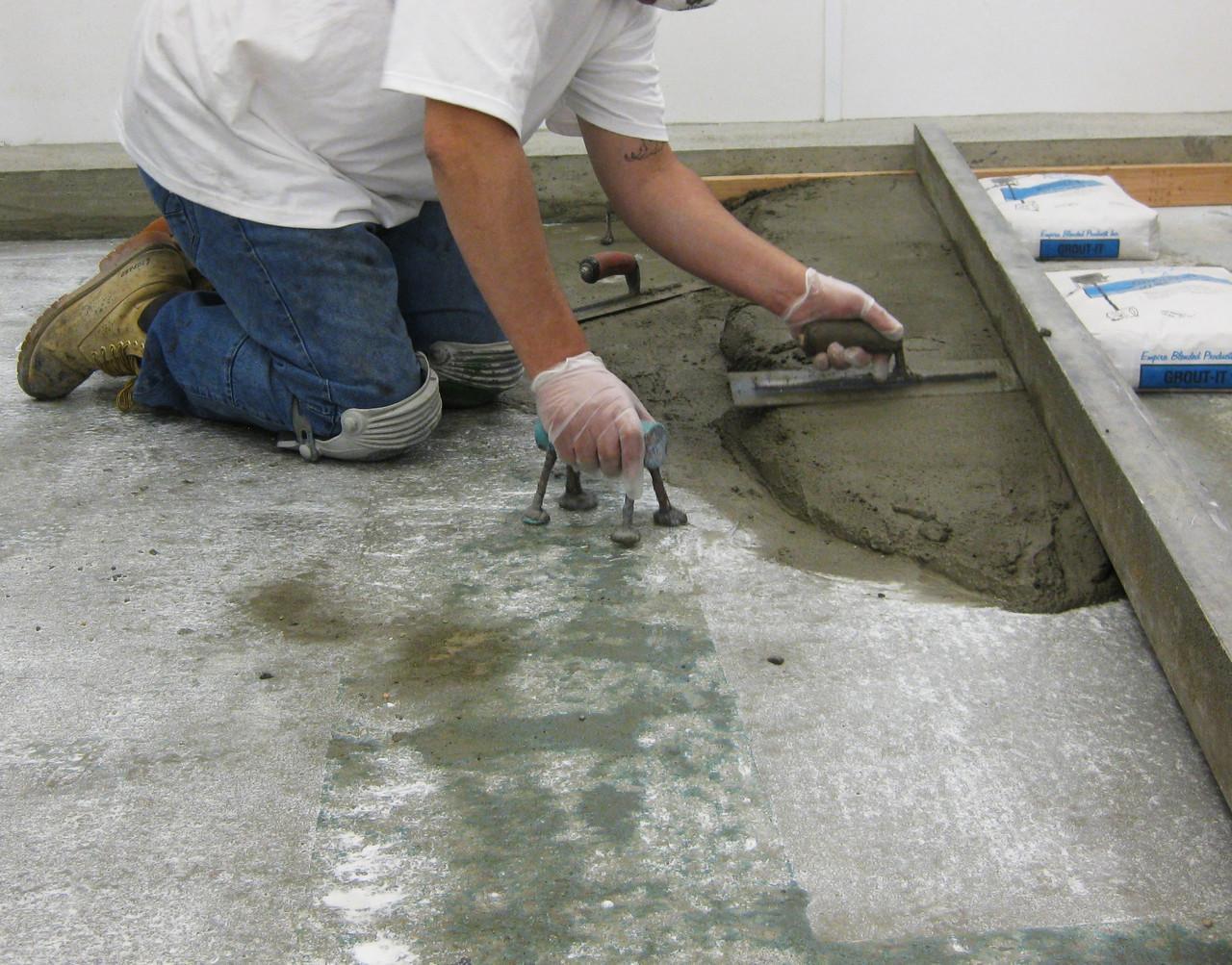
Flowable or trowelable grouts can be useful for filling voids, repairing confined areas, and completing repairs where their strength and placement characteristics match the application.
However, broad areas of spalling, deteriorated floor surfaces, deep patches, vertical repairs, and resurfacing projects may require a concrete repair mortar or resurfacer formulated specifically for those conditions.
Before selecting a material, evaluate:
- Depth and dimensions of the repair
- Condition of the existing concrete
- Required compressive strength
- Traffic and equipment loads
- Exposure to chemicals or moisture
- Required return-to-service time
- Horizontal, vertical, or overhead orientation
- Required consistency and placement method
Matching the material to the actual repair condition is more important than selecting grout based on strength alone.
How Do You Choose Grout for an Industrial Application?
Industrial grout should be selected according to the load, environment, placement requirements, and operating conditions of the installation.
Consider these factors before specifying a product:
- Application: Determine whether the grout will support machinery, anchor bolts, fill voids, support bearing plates, or repair concrete.
- Required strength: Review the compressive strength and other performance requirements established for the installation.
- Placement consistency: Determine whether the material must be flowable, pourable, pumpable, or trowelable.
- Grout dimensions: Consider the depth and size of the space being filled and the manufacturer's recommended placement range.
- Operating environment: Account for moisture, chemicals, vibration, temperature, and other service conditions.
- Cure and downtime requirements: In operating facilities, cure time and return to service may affect product selection.
- Equipment requirements: Machinery manufacturers and project specifications may establish specific grout performance criteria.
Industrial Grout Options from Garon Products
Garon Products offers cementitious and epoxy grout systems for machinery anchoring, equipment support, industrial concrete repair, and related applications.
GARONITE™ HD — Non-Shrink Cementitious Anchoring Grout
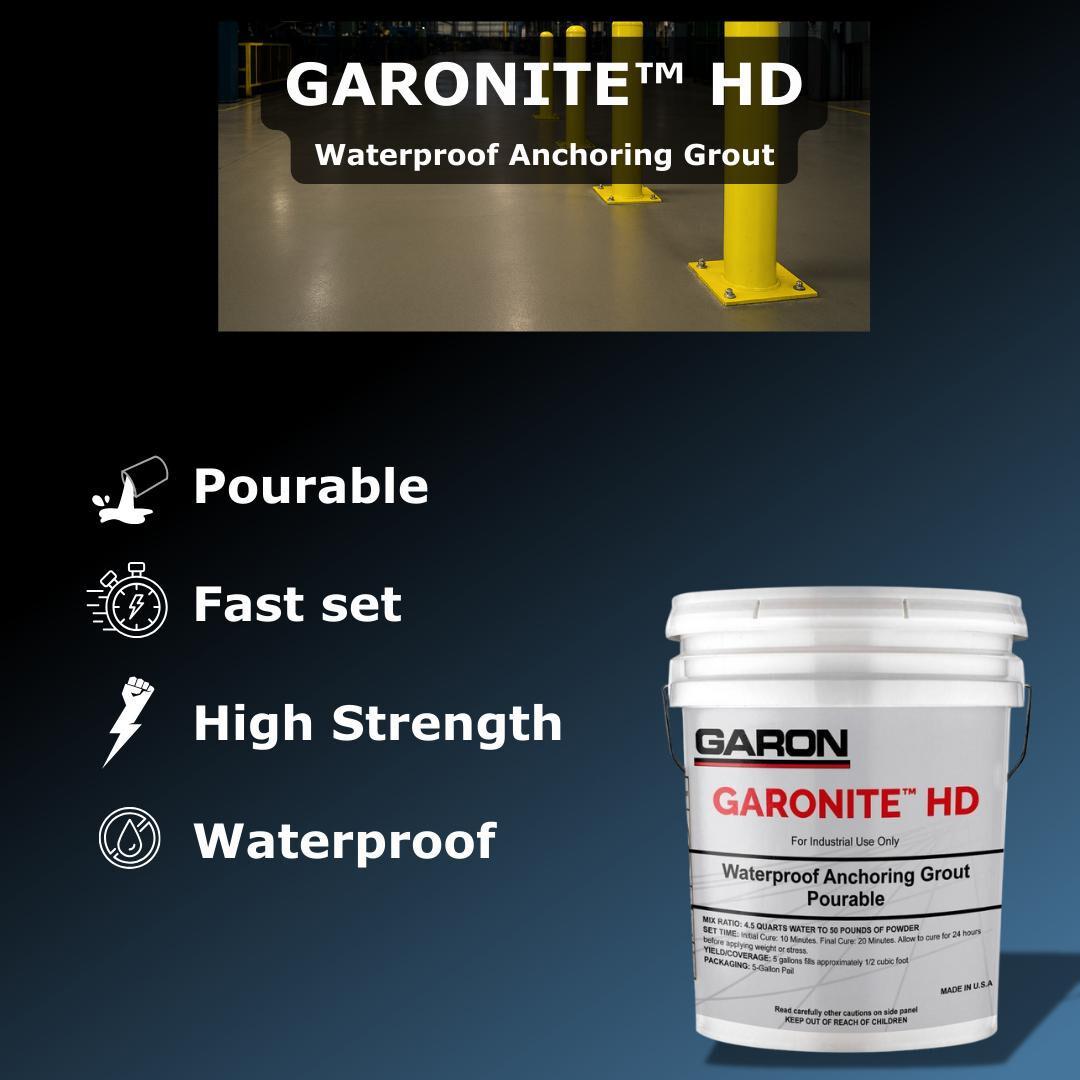
GARONITE™ HD is a fast-setting, high-strength, non-shrink cementitious grout designed for anchoring and industrial grouting applications.
Its pourable consistency makes it suitable for applications including machinery bases, columns, bearing plates, and anchor bolts where a cementitious grout is appropriate.
Typical applications:
- Machinery bases
- Anchor bolts
- Bearing plates
- Columns
- Industrial equipment foundations
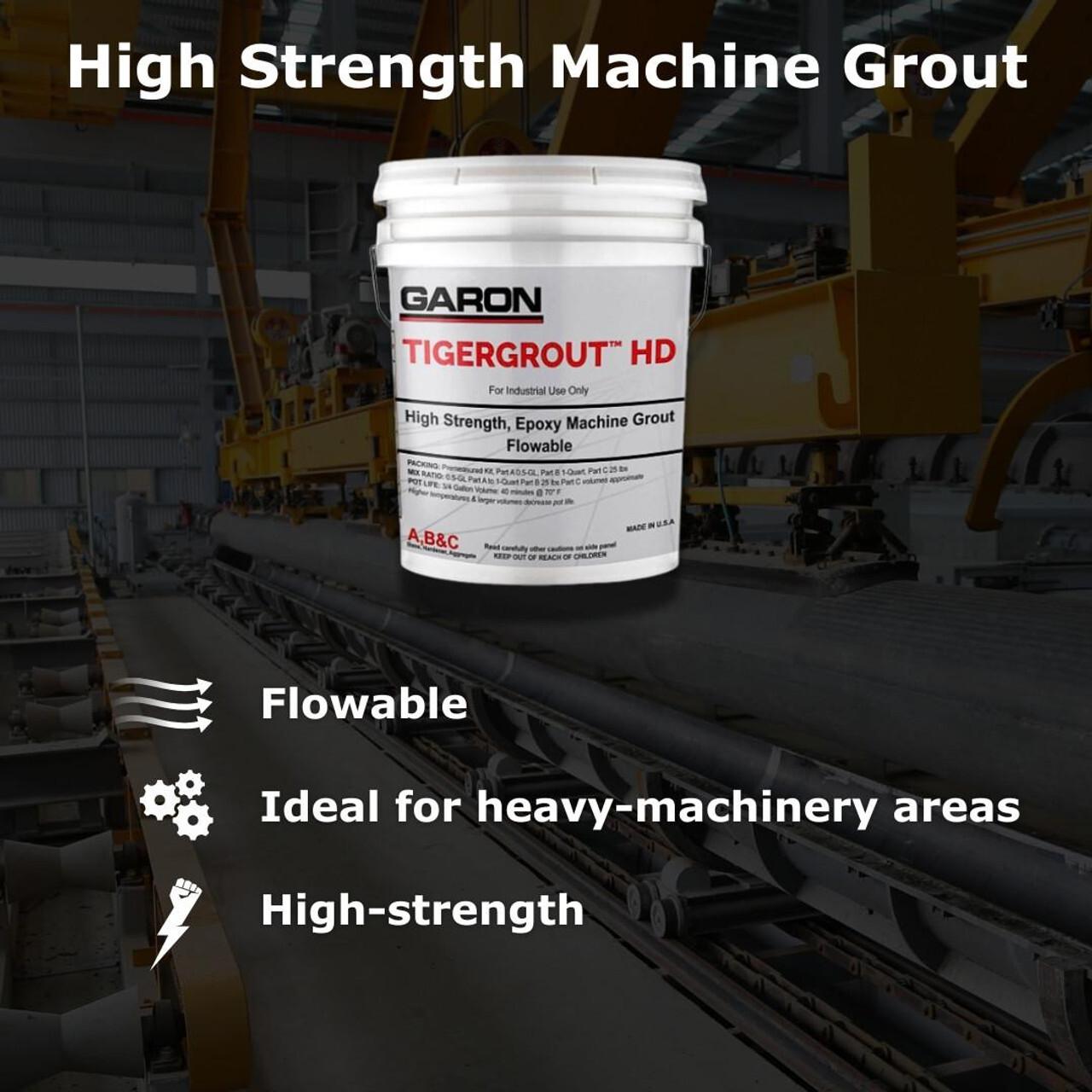
TIGERGROUT™ HD — High-Strength Epoxy Machine Grout
TIGERGROUT™ HD is an epoxy machine grout designed for demanding industrial equipment and precision grouting applications.
Epoxy grout can be appropriate where machinery installations require high strength, strong bonding, and resistance to vibration and demanding operating conditions.
Typical applications:
- Heavy machinery
- Equipment baseplates
- Precision machinery installations
- Industrial equipment foundations
- Applications subjected to vibration or dynamic loads
TIGERCRETE™ SP — High-Strength Non-Shrink Grout
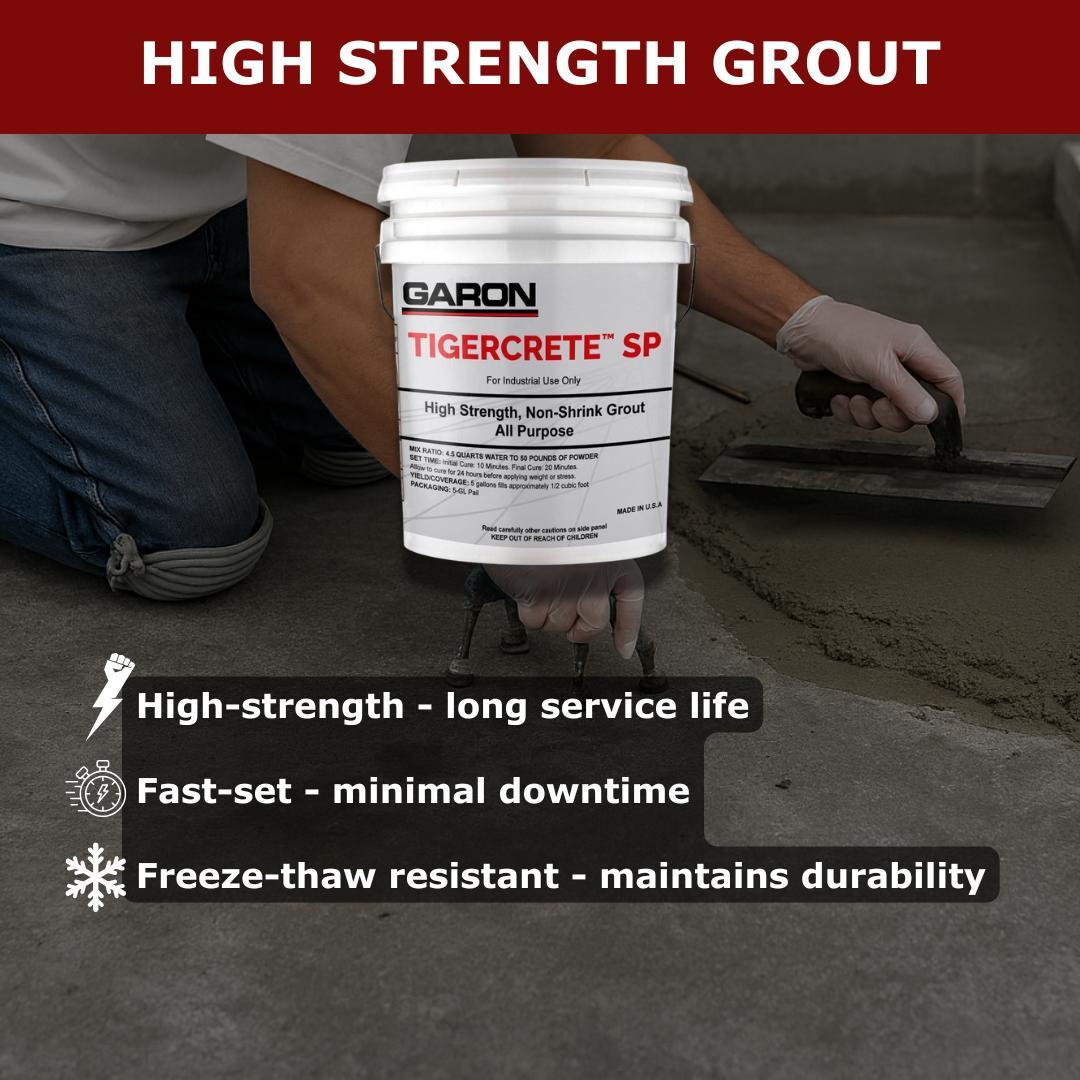
TIGERCRETE™ SP is a high-strength, fast-setting, non-shrink cementitious grout that can be placed at different consistencies depending on application requirements.
The material can be poured or placed at a thicker consistency for applications requiring greater placement control.
Typical applications:
- Industrial concrete repairs
- Equipment and structural grouting
- Horizontal repairs
- Vertical and overhead repairs
- General concrete maintenance
Key Takeaways
- Concrete grout fills voids, supports equipment, transfers loads, and can be used for certain industrial concrete repairs.
- Non-shrink grout helps maintain contact beneath machinery bases, bearing plates, and other supported components.
- Cementitious grout is commonly used for general anchoring, baseplates, structural supports, and industrial grouting.
- Epoxy grout is often selected for demanding machinery installations involving vibration, chemicals, or substantial operational forces.
- Grout should be selected according to the application, load, environment, placement requirements, and equipment specifications.
- Not every concrete repair requires grout; repair mortars and resurfacers may be more appropriate for some floor repair conditions.
Frequently Asked Questions About Industrial Concrete Grout
What type of grout is used under heavy machinery?
Heavy machinery may use either high-strength non-shrink cementitious grout or epoxy machinery grout. The appropriate material depends on equipment loads, vibration, chemical exposure, installation dimensions, and manufacturer or engineering requirements.
What is the difference between grout and concrete repair mortar?
Grout is generally formulated to flow or be placed into confined spaces, voids, and areas beneath structural components. Concrete repair mortar is typically formulated to rebuild damaged concrete surfaces, edges, spalls, or larger deteriorated areas.
Why is non-shrink grout used under baseplates?
Non-shrink grout is used to help maintain contact between a baseplate and its supporting foundation after placement and curing. Maintaining this contact helps provide more uniform support and load transfer.
Is epoxy grout stronger than cementitious grout?
Epoxy grout can provide very high mechanical properties and is commonly used for demanding machinery applications, but strength alone should not determine product selection. Installation dimensions, operating forces, temperature, chemical exposure, and project specifications should also be considered.
Can grout be used around anchor bolts?
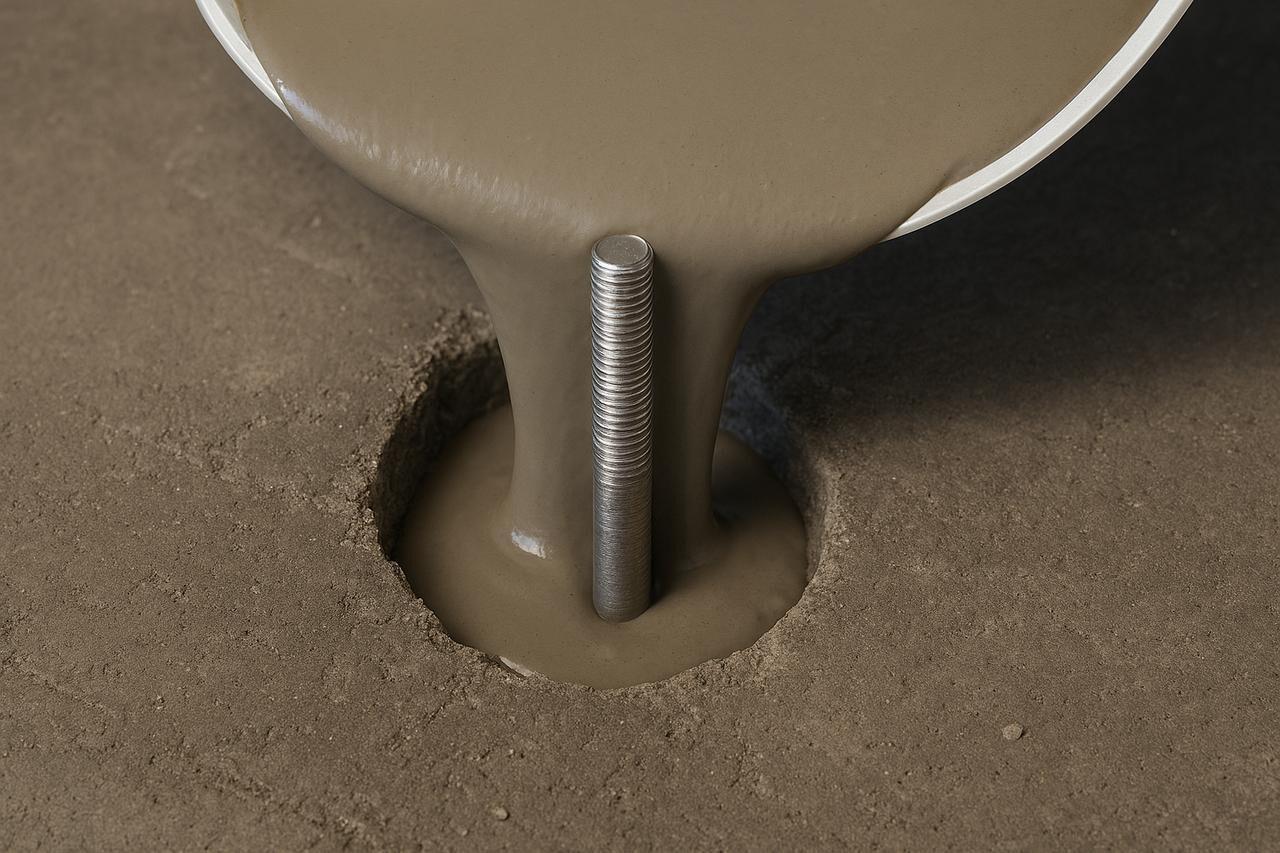
Yes. Non-shrink cementitious and epoxy grouts are commonly used around anchor bolts when the selected material meets the installation and engineering requirements. Proper hole preparation, embedment, spacing, and grout placement are important to the completed installation.
Can industrial grout be used for concrete floor repair?
Some industrial grouts can be used for floor repairs and void filling when their placement characteristics and performance properties match the repair. Larger spalls, deteriorated surfaces, and resurfacing projects may be better suited to dedicated concrete repair mortars or resurfacing systems.
Selecting the Right Industrial Grout
The correct grout depends on what is being supported or repaired, the loads involved, environmental exposure, placement conditions, and required return to service. Comparing these requirements before choosing between a cementitious non-shrink grout, epoxy machinery grout, or concrete repair material can help establish a more appropriate repair or installation system.
For machinery anchoring and concrete grouting applications, explore Garon Products' Concrete Grouts & Anchoring products to compare available options and application information.
If you're unsure which grout is appropriate for your application, contact the Garon Products technical team for product recommendations based on your project requirements.